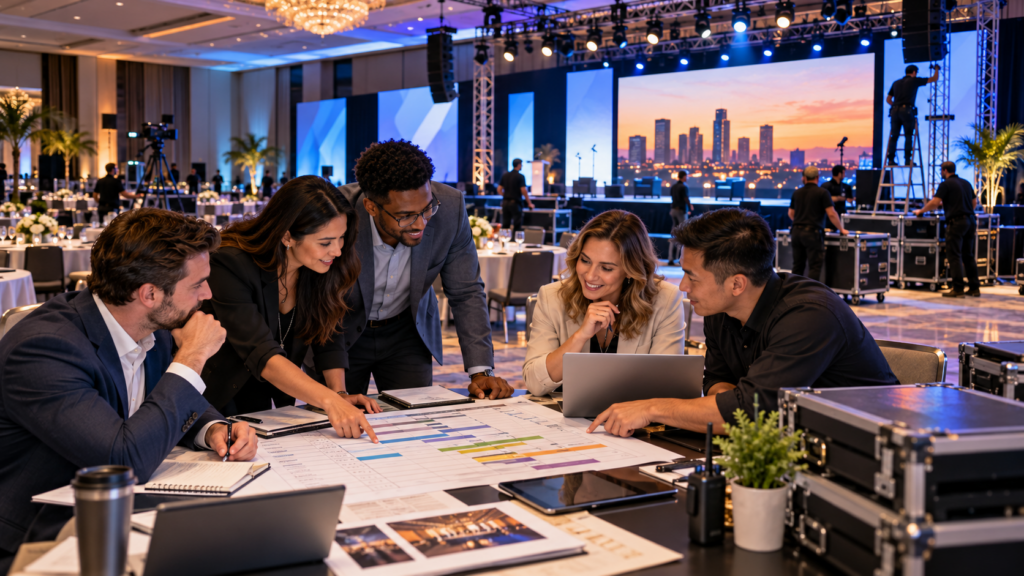
A successful corporate event rarely begins when the doors open.
It starts months earlier—with a clear objective, a realistic budget, the right venue, an experienced production team, confirmed speakers, finalized content, and dozens of deadlines working toward the same date.
Whether your company is planning an annual meeting, leadership summit, sales kickoff, product launch, employee conference, awards program, trade show, or customer event, creating a detailed corporate event timeline is one of the most important steps you can take.
According to Cvent, an event-planning timeline should function as a chronological checklist covering deadlines, suppliers, budgets, venues, technology, speakers, promotion, and other major responsibilities. Its published planning framework begins as far as 10–12 months before an event for larger productions, although Cvent also notes that every event is different and timelines should be adjusted according to event size, duration, and complexity. [Cvent]
That last point matters.
A 75-person executive meeting does not require exactly the same timeline as a 2,000-person corporate conference. But the principles behind a strong timeline remain remarkably consistent.
Here is a practical framework corporate planners can use to keep the entire production moving in the right direction.
10–12 Months Out from Event: Start With the “Why”
Before choosing stage colors, keynote speakers, or dinner menus, answer a more important question: Why are we having this event?
Corporate events can serve very different business purposes. Cvent identifies objectives ranging from communicating company strategy and training employees to supporting sales initiatives, launching products, rewarding teams, entertaining customers, or influencing how customers interact with a brand. [Cvent]
That means your first planning meetings should establish measurable objectives.
For example, is the goal to:
- Train 500 salespeople on a new product?
- Introduce a new corporate strategy?
- Generate qualified leads?
- Bring geographically dispersed employees together?
- Launch a product to customers and media?
- Recognize top-performing employees?
- Educate channel partners?
Once that objective is clear, establish the preliminary budget, target attendance, event dates, location requirements, planning team, and major responsibilities.
This is also a smart time to begin talking with your event technology and AV production partner. Cvent’s recommended 10–12-month timeline specifically includes appointing an event technology provider early in the process rather than waiting until the final weeks. [Cvent]
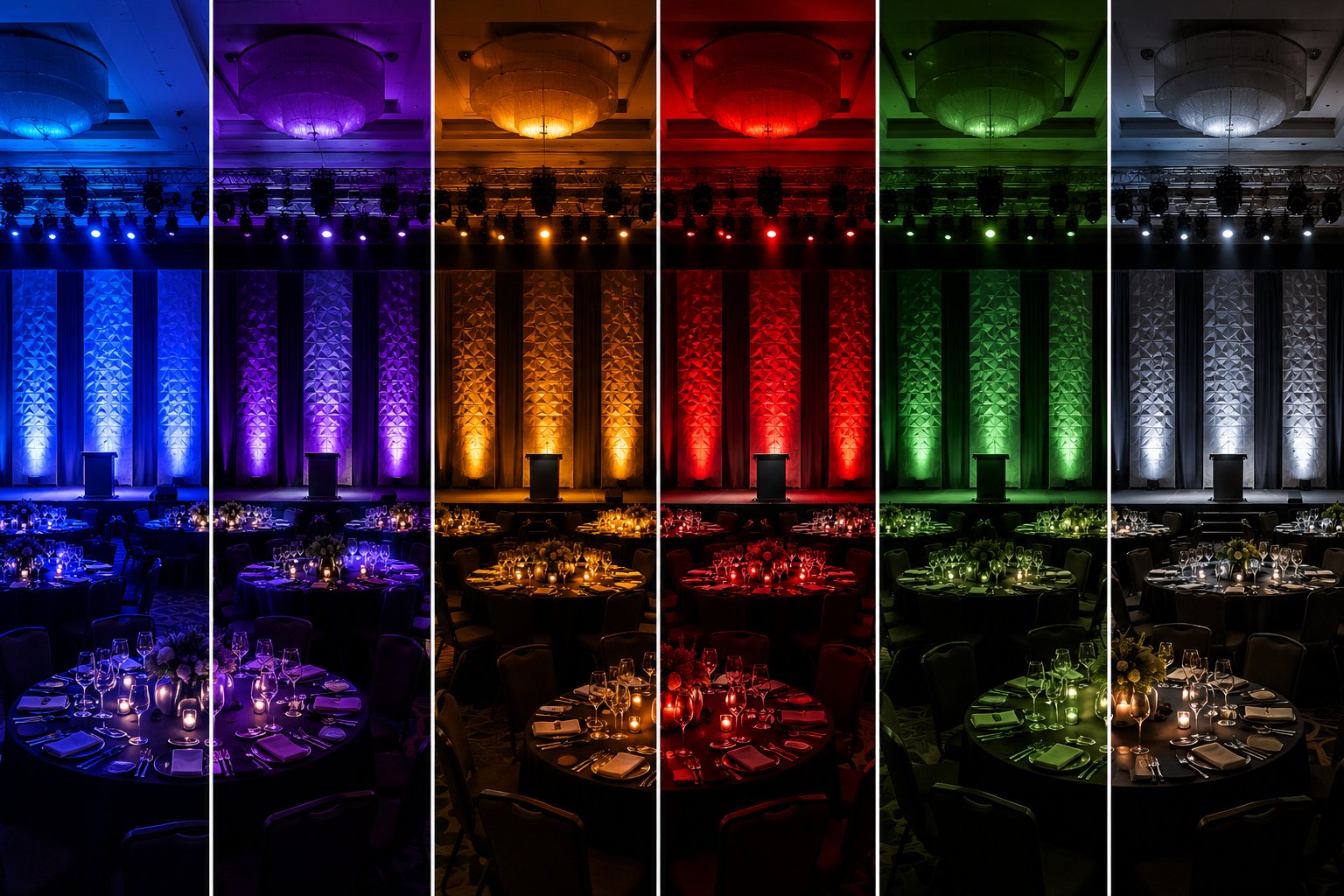
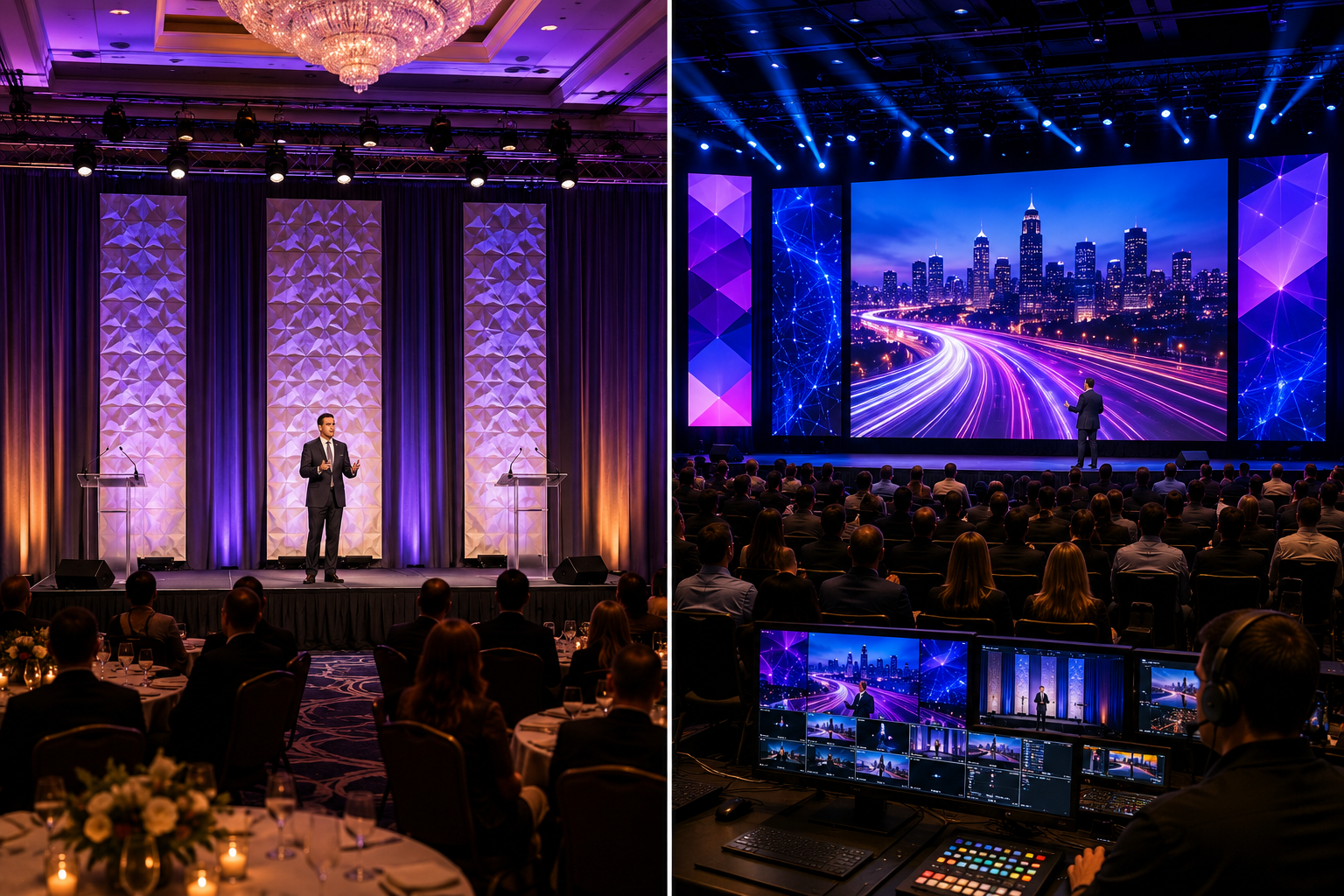
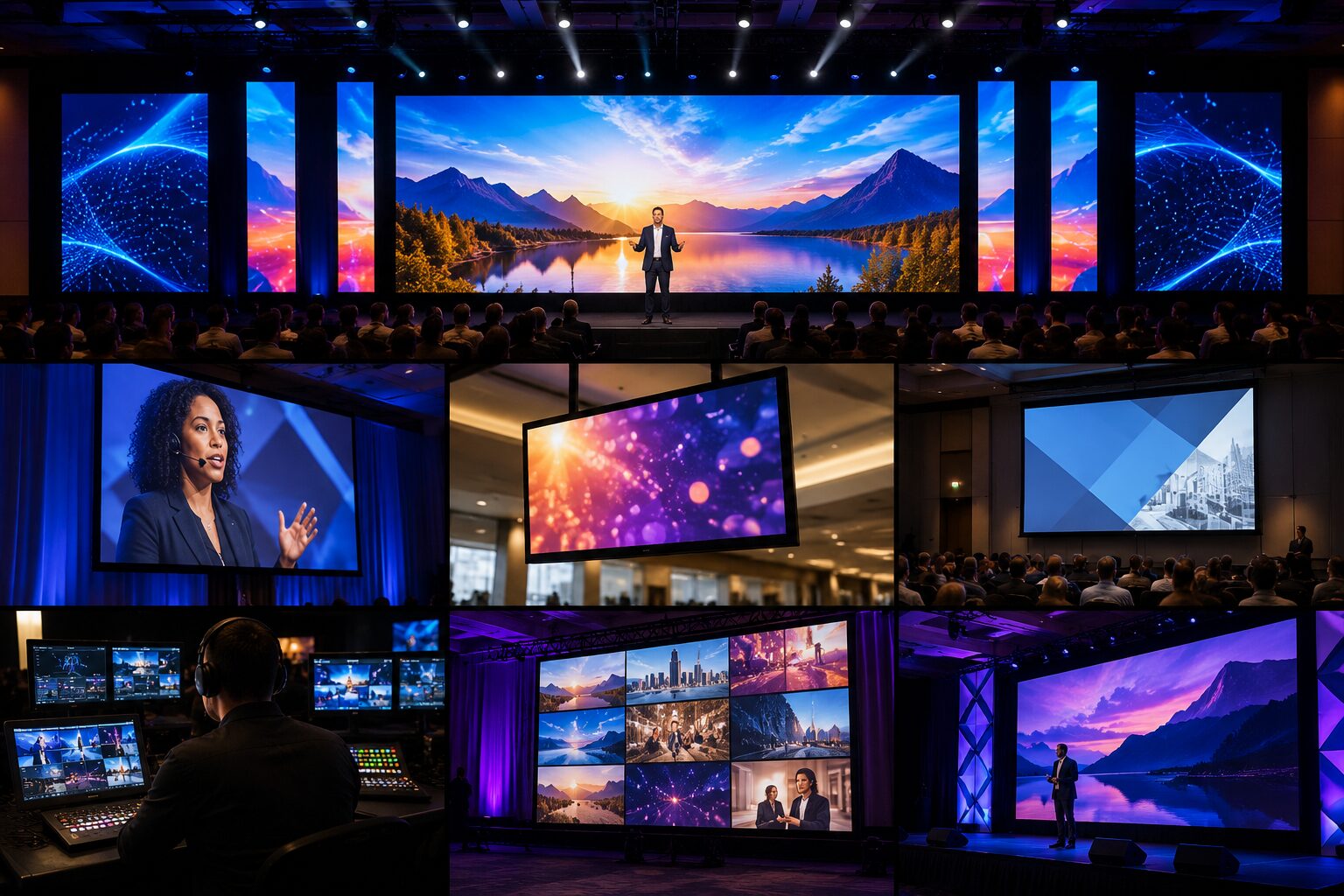
At Phoenix Technology Audio Visual, we encourage companies to bring AV into the conversation early because decisions about the venue, stage, room layout, lighting, cameras, displays, LED walls, live-streaming, and presentations often affect one another.
6–9 Months Out from Event: Secure the Venue and Build the Experience
Once the strategy is established, the event begins taking physical shape. Cvent recommends using this stage to finalize the venue and suppliers, develop the room layout, confirm speakers, and begin attendee registration and promotion. [Cvent]
For corporate events, venue selection should go far beyond asking whether the ballroom is big enough.
Evaluate:
- Power: Can the venue support your production requirements?
- Internet: Is the network adequate for attendees, event applications, live-streaming, or other production needs?
- Rigging: What can be suspended from the ceiling, and what are the venue’s rules and costs?
- Load-in: Where do production trucks unload? Is there a dock? Freight elevator?
- Acoustics: Will the room require additional sound treatment or system design?
- AV policies: Can you bring in your own production company?
- Stage and sight-lines: Can everyone actually see the speaker and screens?
Cvent’s venue guidance specifically recommends evaluating AV capability, Wi-Fi, utilities, technical support, acoustics, backstage/preparation areas, and whether an outside AV provider can work effectively within the property. [Cvent]
This is where a site visit can save significant headaches later.
Bring your event planner, venue contact, and AV production representative together whenever possible. Walking the room allows the team to identify challenges that aren’t always obvious on a floor plan.
3–6 Months Out from Event: Turn the Concept Into a Production
Now the event moves from concept to execution. By this point, your general sessions, breakout sessions, key speakers, branding, and major program elements should begin taking shape.
This is the period to determine what attendees will actually experience.
Will the general session use:
- Wireless microphones?
- LED walls or projection?
- Multiple cameras?
- Intelligent lighting?
- Opening videos?
- Live-streaming?
- Confidence monitors?
- Walk-in music and playback?
- Custom staging or scenic elements?
The answers should influence your stage layout and run of show—not be added afterward.
This is also the time to develop contingency plans. Cvent recommends beginning contingency planning during the three-to-six-month window for situations such as weather, transportation disruptions, safety issues, or poor turnout. [Cvent]
For production teams, contingency planning can also include backup presentation computers, spare microphones, redundant playback solutions, alternative signal paths, and clear procedures for responding to technical problems.
Corporate events involve too much time, money, and executive visibility to rely on: “We’ll figure it out when we get there.”
1–3 Months Out from Event: Get Specific
This is where details begin replacing assumptions. Cvent recommends confirming audiovisual requirements during this period, including the number and types of microphones required for presenters and moderators. [Cvent]
At Phoenix Technology Audio Visual, this is where conversations can become highly specific. Instead of: “We need microphones.” the discussion becomes:
“Three executives will sit onstage, one moderator will move through the audience, the CEO prefers a lavalier, and two handheld microphones are required for audience Q&A.”
Instead of: “We need video.” it becomes:
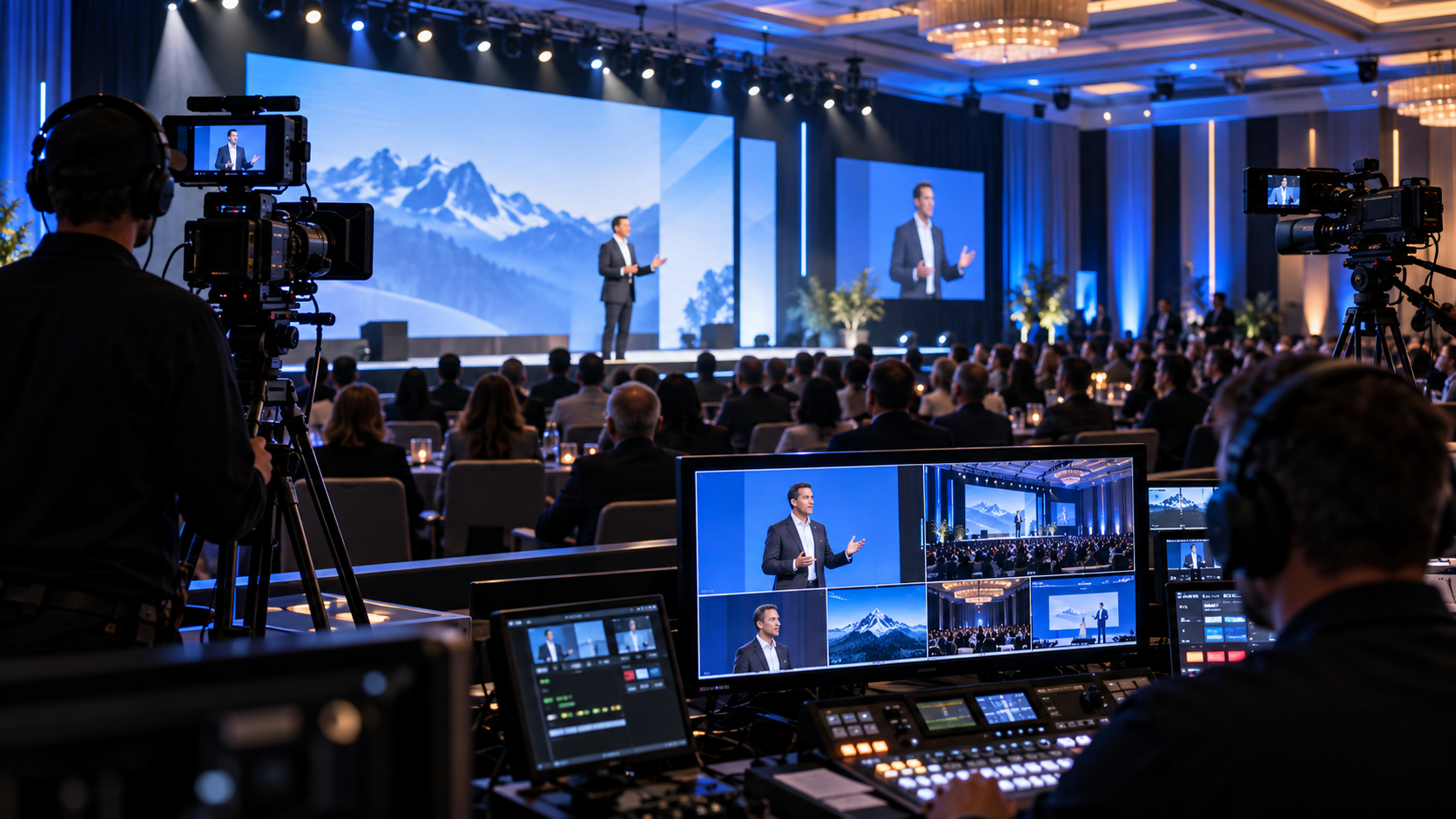
“We need a wide camera, two presenter cameras, presentation playback, recording, IMAG on the LED wall, and a finished program feed.”
Those details make the difference between renting equipment and actually designing a production.
This is also the ideal time to confirm speaker presentations, graphics, videos, logos, sponsor materials, award content, accessibility requirements, registration procedures, transportation plans, and catering numbers as they become available.
One Month Out from Event: Build the Run of Show
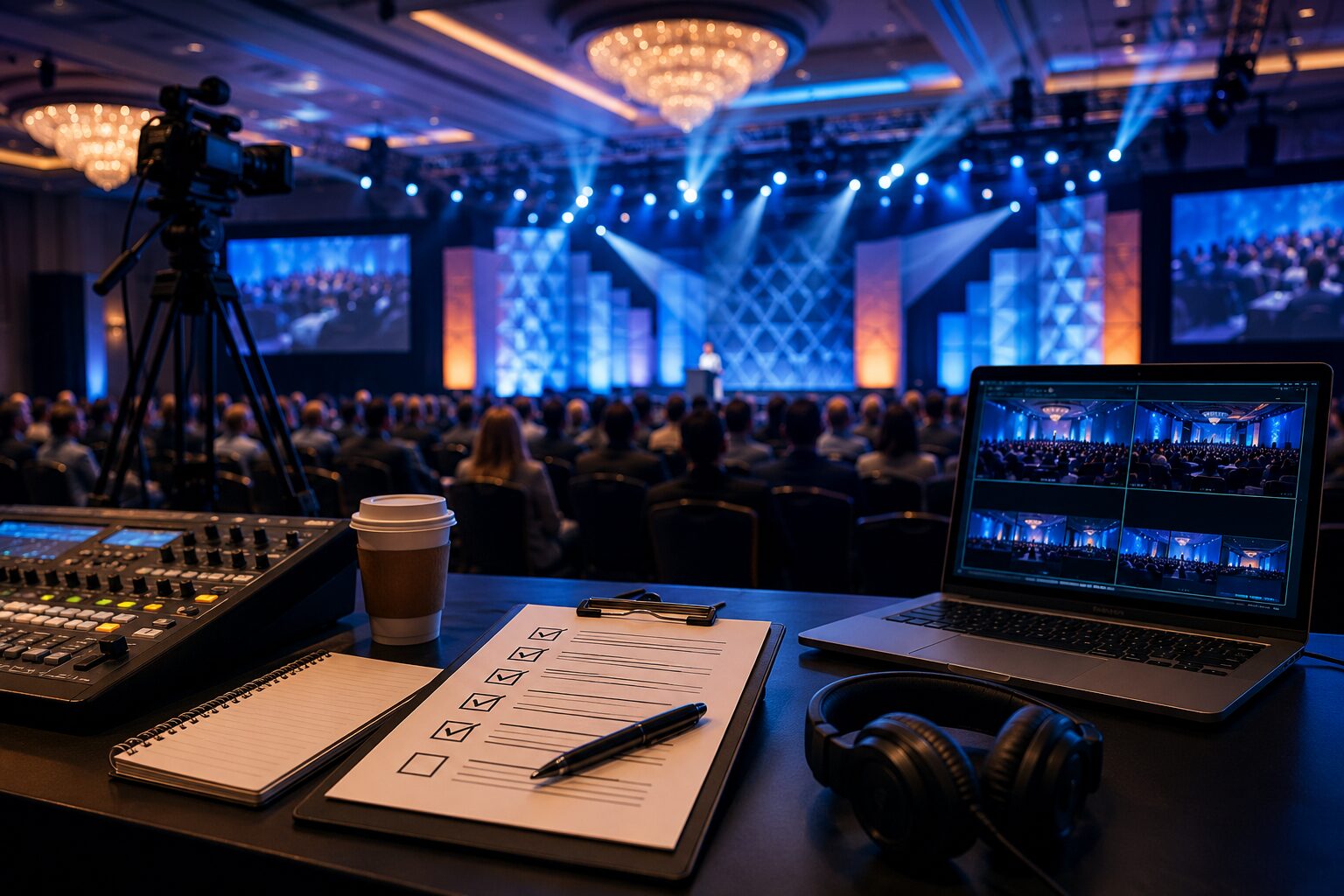
If there is one document every major corporate event should have, it is a detailed run of show. Cvent’s corporate planning guidance recommends creating an event timeline that includes adequate time between sessions for transitions and possible technical delays. [Cvent]
Your run of show should account for much more than: 9:00 — CEO speaks.
A production-ready schedule may instead include:
- 8:55 — Five-minute warning
8:58 — House music fade
8:59 — House lights to half
9:00 — Opening video GO
9:02 — Video ends / stage lights GO
9:02 — Walk-up music GO
9:03 — CEO walks onstage
9:03 — Camera 2 live
9:04 — Presentation begins
That level of detail allows the planner, show caller, audio engineer, video director, lighting operator, presentation technician, stage manager, and speakers to work from the same plan.
The audience should never know how much coordination is happening; That’s the point.
One Week Out from Event: Confirm Everything
The final week is not the time to discover that the keynote speaker has redesigned their presentation in an unusual format or that a surprise video has been added to the show.
Cvent’s recommended one-week checklist includes team briefings, final attendee counts, signage, photographer and videographer briefings, and—especially important for production—creating cue sheets for the AV team. [Cvent]
Confirm:
- Final run of show
- Presenter names and titles
- Presentation files
- Videos
- Microphone assignments
- Walk-up music
- Stage entrances and exits
- Camera needs
- Lighting cues
- LED wall graphics
- Recording requirements
- Live-stream information
- Sponsor content
- Emergency contacts
Create one central source of truth rather than allowing critical information to live inside dozens of unrelated emails.
Event Day: Rehearse Before the Audience Arrives
The doors should not open five minutes after the final cable is connected. Build time for testing. Cvent recommends early arrival, supplier briefings, speaker sound checks, safety reviews, and accessibility checks on event day. [Cvent]
Professional AV teams need sufficient time to test the entire signal chain. Microphones should be checked. Videos should play. Presentations should appear correctly.
Lighting cues should fire. Camera shots should be framed. LED content should display properly. Remote presenters should connect. Speakers should know where to stand and where to enter.
For complex corporate events, a proper rehearsal can expose issues while there is still time to solve them.
Finding a problem at 7:00 a.m. is inconvenient. Finding it at 9:01 a.m. with 800 people watching is something else entirely!
After the Event: Your Timeline Isn’t Finished
When the last attendee leaves, resist the temptation to declare the project complete. Post-event evaluation is part of the timeline too.
Cvent recommends reviewing budgets, vendor performance, attendee feedback, lead-generation data, sponsor analytics, invoices, and future event dates after the event. Recorded presentations can also be turned into an on-demand content library. [Cvent]
For corporate organizations, this is particularly important because event performance increasingly needs to connect to broader business objectives.
Did employees retain the training? Did customers engage with the product launch? Did the sales meeting generate useful opportunities? Which sessions performed best? Was attendance higher than expected? Which production elements should change next year?
The 2026 American Express Global Meetings & Events Forecast reports that delivering exceptional attendee experiences remained meeting professionals’ leading priority for a second consecutive year, while technology, productivity, data-driven decision-making, sustainability, and human connection continue to shape modern meetings. [Amex GBT]
Your post-event review is where those lessons become improvements for the next production.
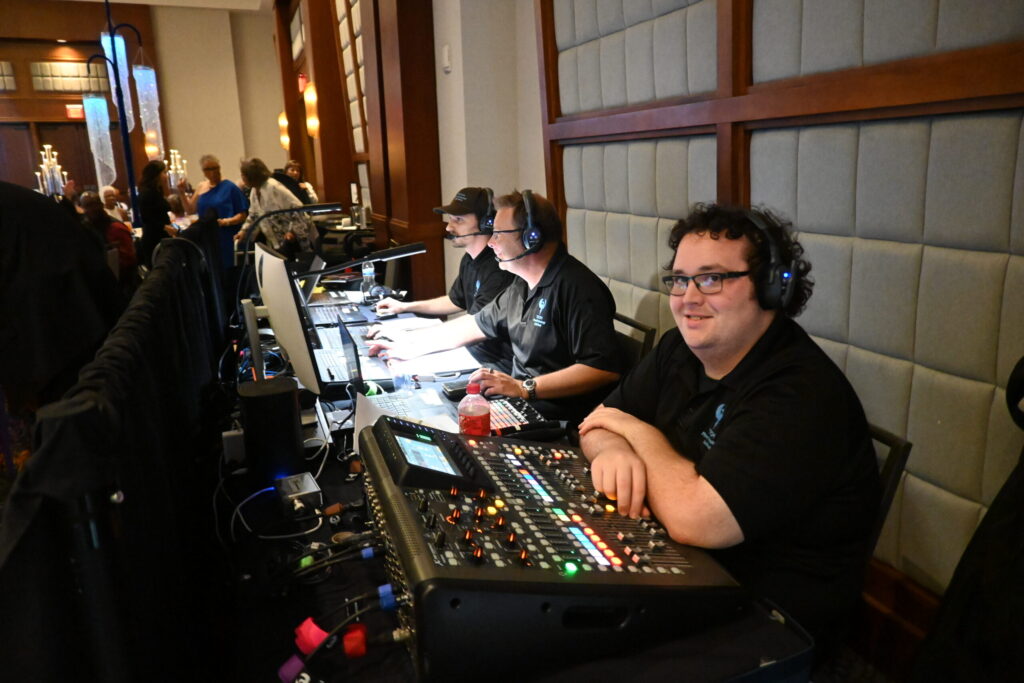
Build Your Timeline With Your AV Partner—not Around Them
One of the easiest ways to create unnecessary stress is to plan an entire corporate event and contact the AV company at the end:
- Audio affects room layout.
- Lighting affects video.
- Video affects stage design.
- LED walls affect content creation.
- Cameras affect sight-lines.
- Live-streaming affects internet requirements.
- Rigging affects venue planning.
- Presentations affect playback systems.
Everything is connected.
Phoenix Technology Audio Visual can work alongside corporate planners from the early planning stages through load-in, rehearsals, show day, and post-event production.
Our professional services include live audio, video production, LED walls, event lighting, staging and scenic solutions, multi-camera production, live-streaming, recording, presentation support, technical staffing, and complete live-event production.
Whether you’re planning a corporate conference in Phoenix or Scottsdale, a leadership meeting in Tucson, an executive retreat in Sedona or Prescott, a company event in San Diego, or ANYWHERE in the Continental United States, start the technical conversation with us early.
A good corporate event timeline tells everyone what needs to happen. A great event team makes sure it happens when it’s supposed to.
Learn more about Phoenix Technology Audio Visual and see examples of our past work HERE, and Be sure to give a follow over on FACEBOOK & LINKEDIN to see more amazing content from your favorite local AV company!
Phoenix Technology Audio Visual
High Tech, Low Footprint Solutions!
Research & planning resources
The planning framework above draws primarily from Cvent’s published event-planning guidance, including its detailed 10–12-month through post-event timeline. Cvent — Ultimate Event Planning Timeline Guide
Additional guidance on corporate-event objectives, schedules, rehearsals, venue considerations, and post-event measurement came from Cvent’s corporate event planning and venue resources. Cvent — Corporate Event Planning Guide Cvent — Event Venue Checklist
Industry context on current meeting priorities comes from the 2026 Global Meetings & Events Forecast from American Express Global Business Travel. Amex GBT — 2026 Global Meetings & Events Forecast