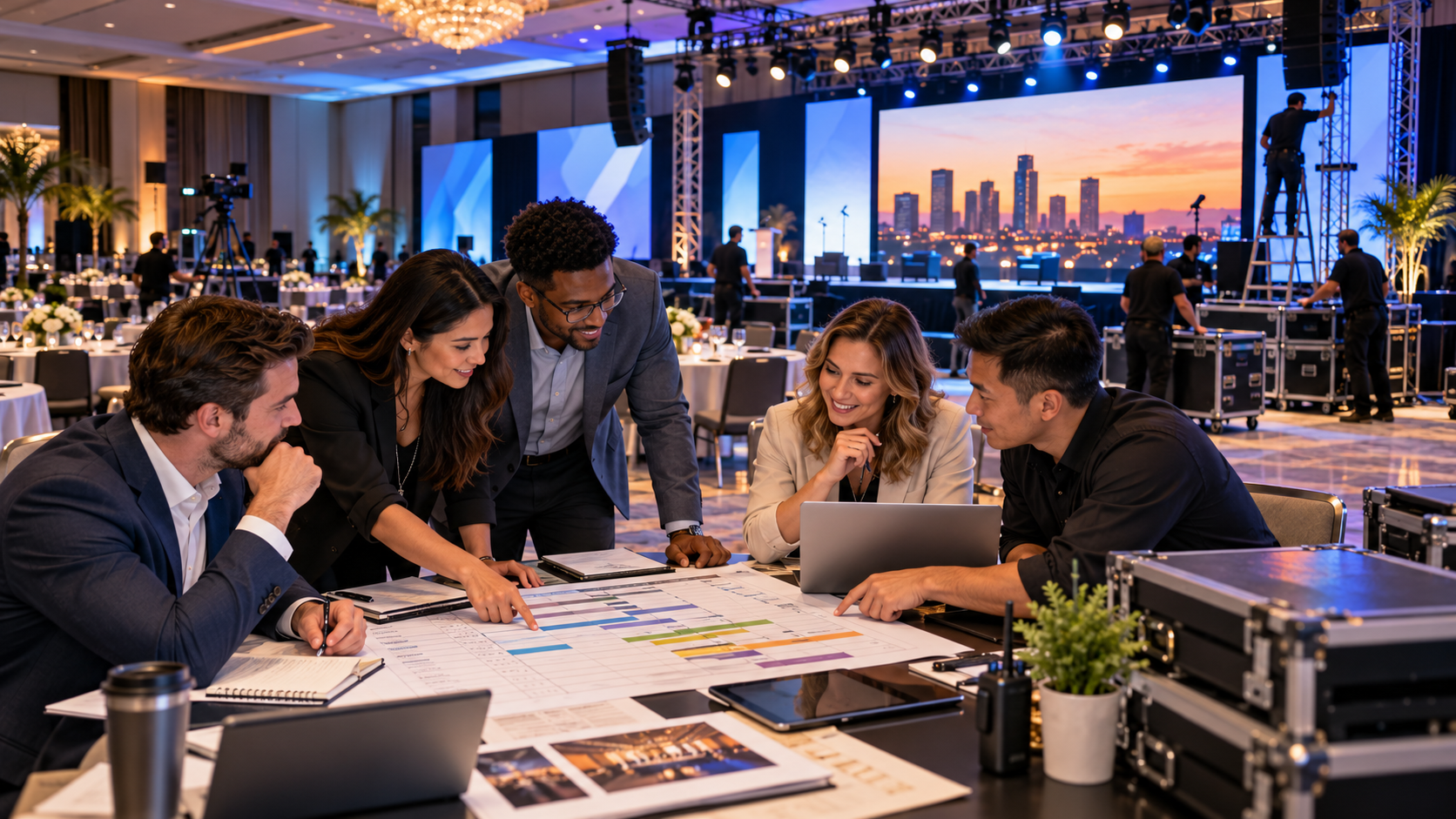
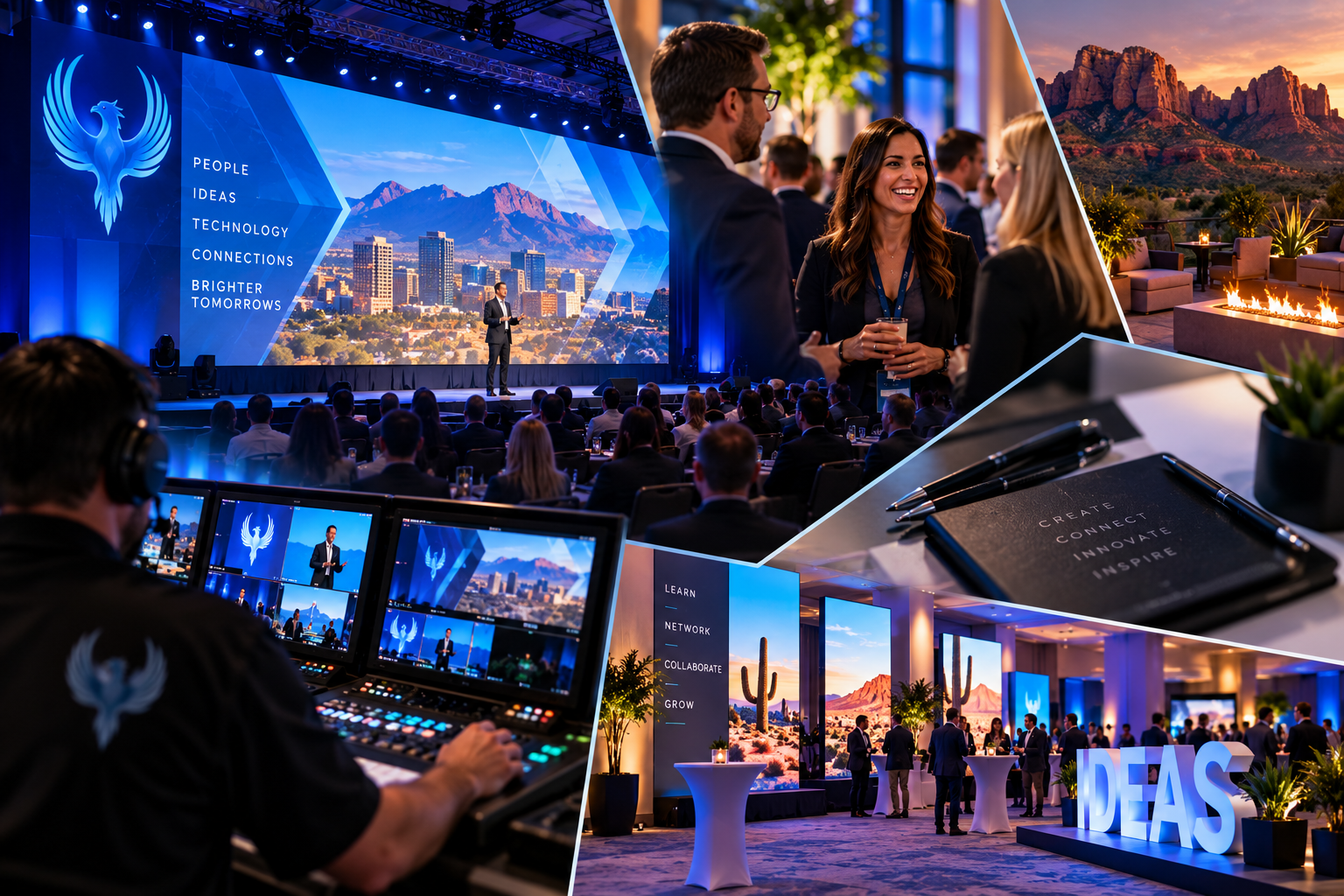
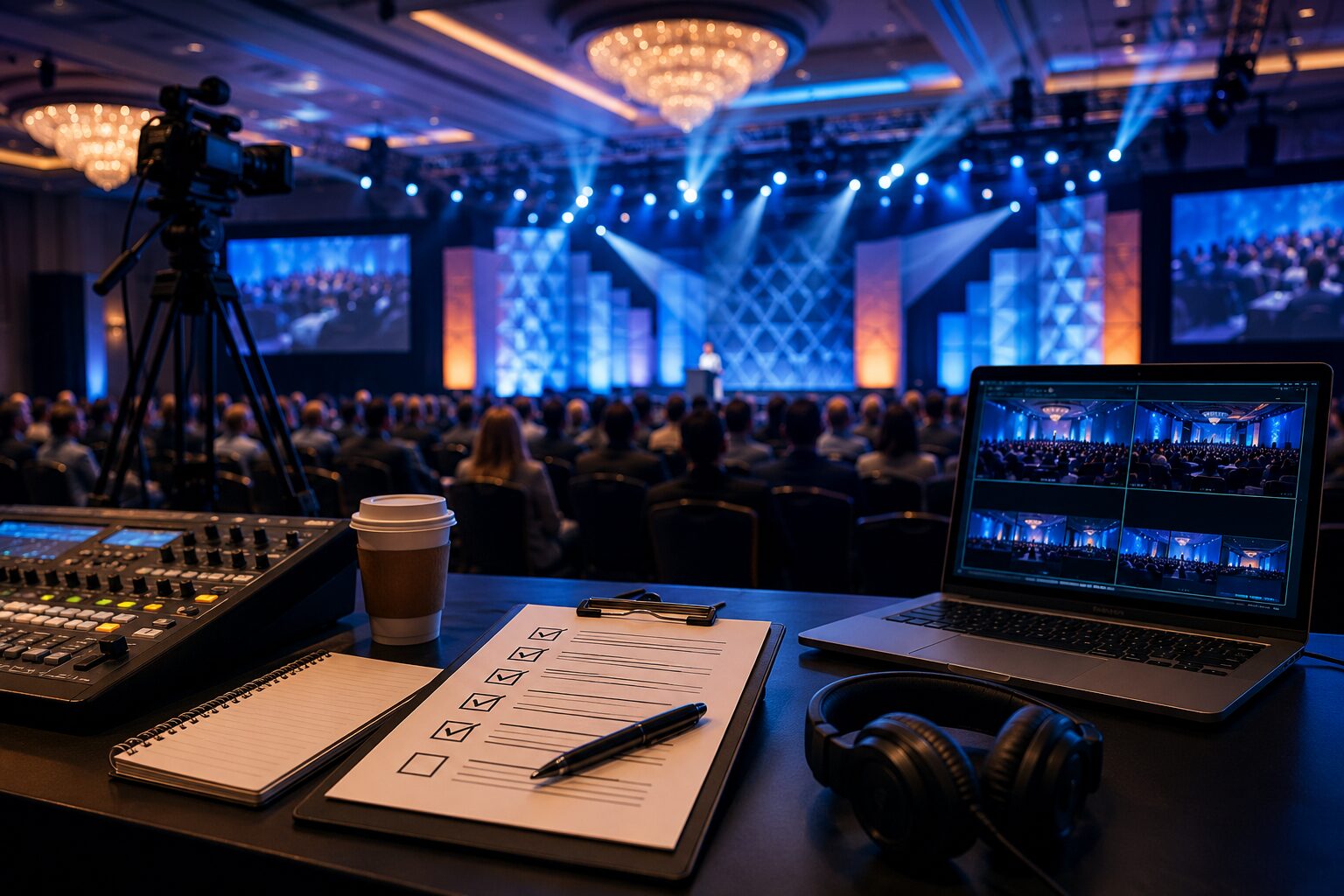
When your guests walk into a ballroom, conference center, or event venue, what is one of the first things they see? The stage design. Before the keynote speaker delivers a single word, before an award is presented, and before the fundraising appeal begins, your stage has already started communicating something about your event.
For event planners organizing corporate summits, nonprofit galas, fundraising events, awards ceremonies, large sales meetings, conferences, or holiday celebrations, stage design shouldn’t be an afterthought. It helps establish the personality of the event and becomes the visual centerpiece for presentations, photographs, videos, sponsor recognition, and many of the biggest moments of the night.
One of the most important choices is deciding between a traditional scenic backdrop and an LED video wall. And despite what you might think, there isn’t one answer that’s right for every event.
At Phoenix Technology Audio Visual, we believe your stage design should be selected around your audience, venue, content, budget, and goals—not simply around whichever technology happens to be newest. So, let’s compare the two.
What Do We Mean by a Traditional Backdrop?
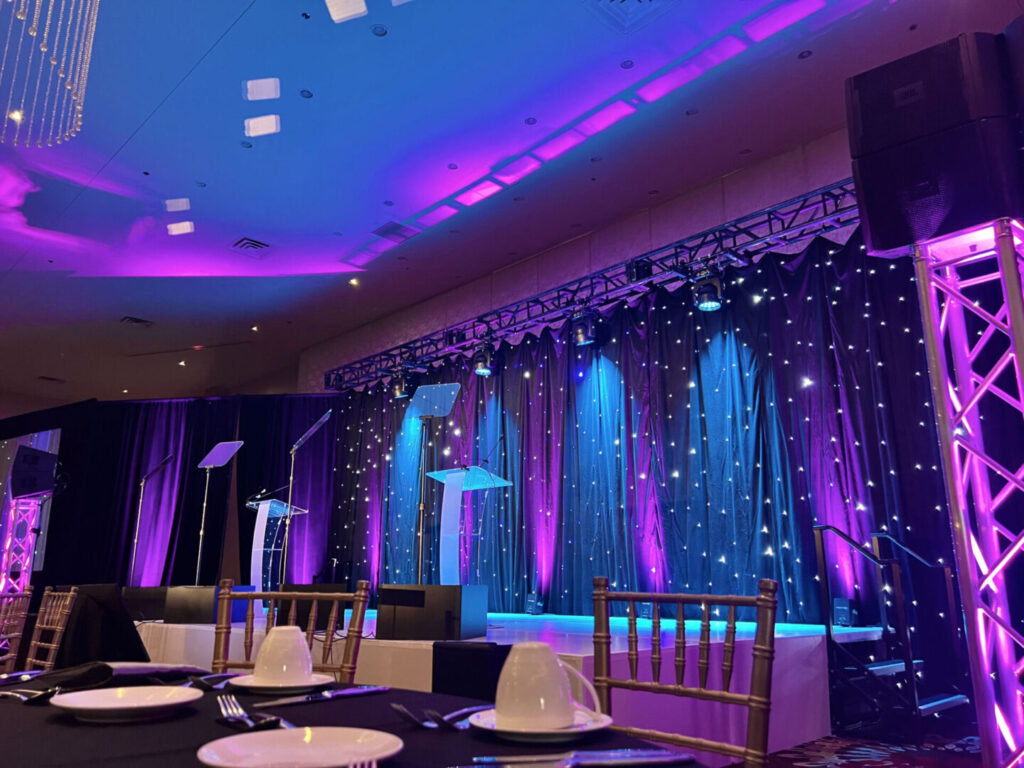
A stage backdrop can include everything from pipe and drape and scenic flats to custom printed graphics, fabric treatments, step-and-repeat designs, dimensional scenic pieces, or combinations of these elements with professional lighting.
And don’t underestimate what a great scenic backdrop can accomplish. With the right design and lighting, a relatively simple stage can become elegant, sophisticated, and extremely photogenic.
Imagine a nonprofit’s annual black-tie gala. The organization may not need video behind the presenters throughout the entire evening. Instead, the planner could choose elegant scenic flats accented with the organization’s colors, uplighting, Lekos, and strategically positioned décor.
The result can be beautiful without overwhelming the room.
Advantages of a Traditional Backdrop Stage Design
1. Elegant Simplicity
Not every event needs constant movement behind the presenter.
For an awards dinner, executive reception, or formal gala, a thoughtfully designed scenic backdrop can provide a timeless appearance that keeps attention on the people on your stage design.
2. Excellent for Photography
A properly lit scenic backdrop can provide a consistent background for event photography, award presentations, executive portraits, and social media content.
3. No Content Programming Required
An LED wall needs content. A scenic backdrop doesn’t.
Once your backdrop is installed and properly lit, you aren’t worrying about creating motion graphics, formatting videos, changing sponsor slides, or building screen layouts.
4. It Can Be Budget Friendly
Depending on the size and complexity of the design, scenic treatments may offer an attractive solution for events that don’t require a large digital display.
5. Lighting Can Completely Transform It
This is where your production company becomes particularly important. Stage washes, uplighting, Lekos, gobos, moving lights, and other fixtures can dramatically change the appearance of scenic elements throughout the evening.
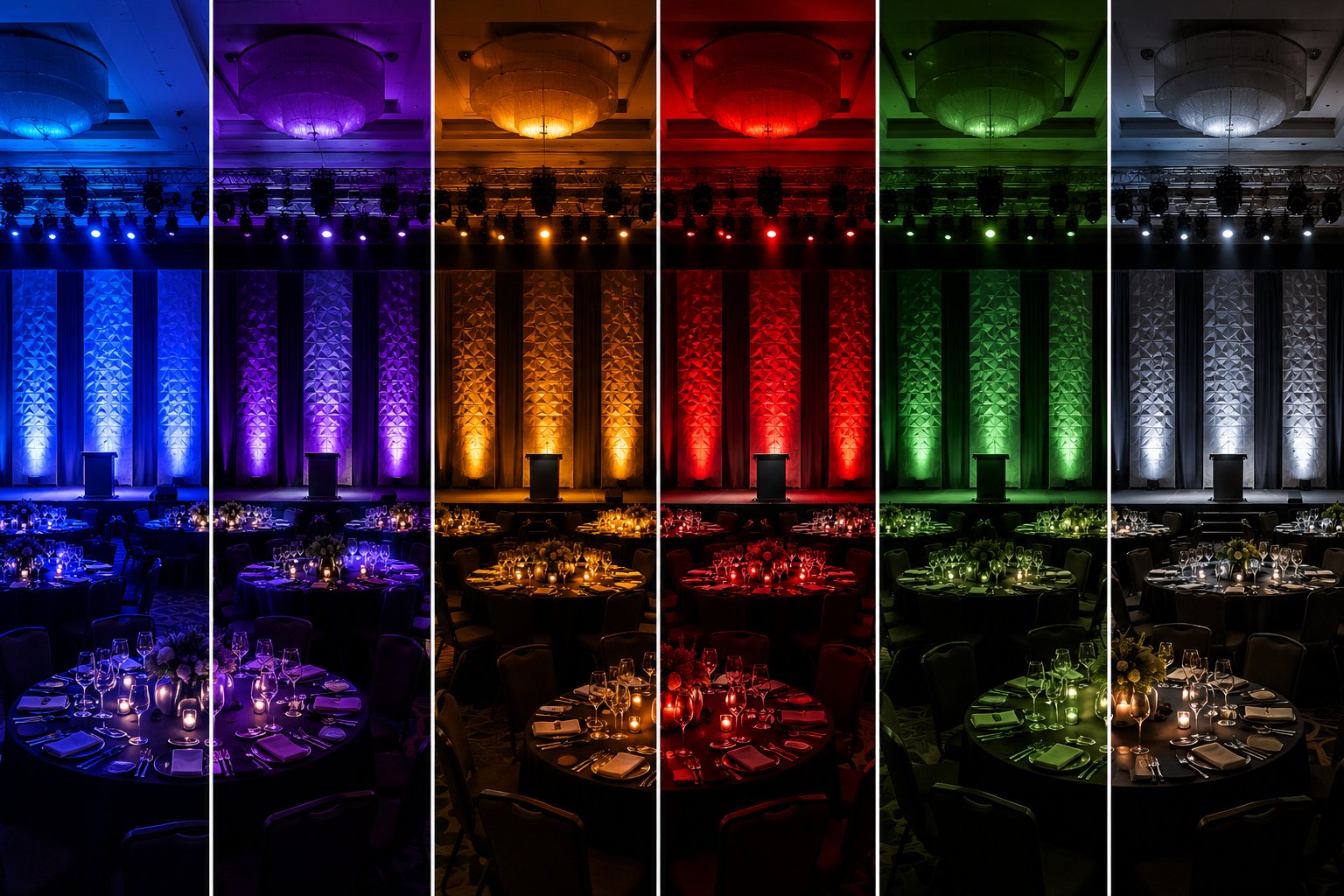
The same white scenic wall could appear blue during guest arrival, warm amber during dinner, and vibrant purple during an awards presentation. One physical backdrop can therefore support several different looks.
Where Traditional Stage Design Backdrops Have Limitations
The primary limitation is obvious: They’re static.
Once a logo is printed, it can’t suddenly become a video. Once sponsor signage has been produced, adding another sponsor isn’t as simple as changing a slide.
And a physical backdrop can’t suddenly become a live camera feed when your keynote speaker walks onto the stage. That’s where LED walls fundamentally change what’s possible.

What Makes an LED Wall Different for Stage Design?
An LED wall isn’t simply a giant television.
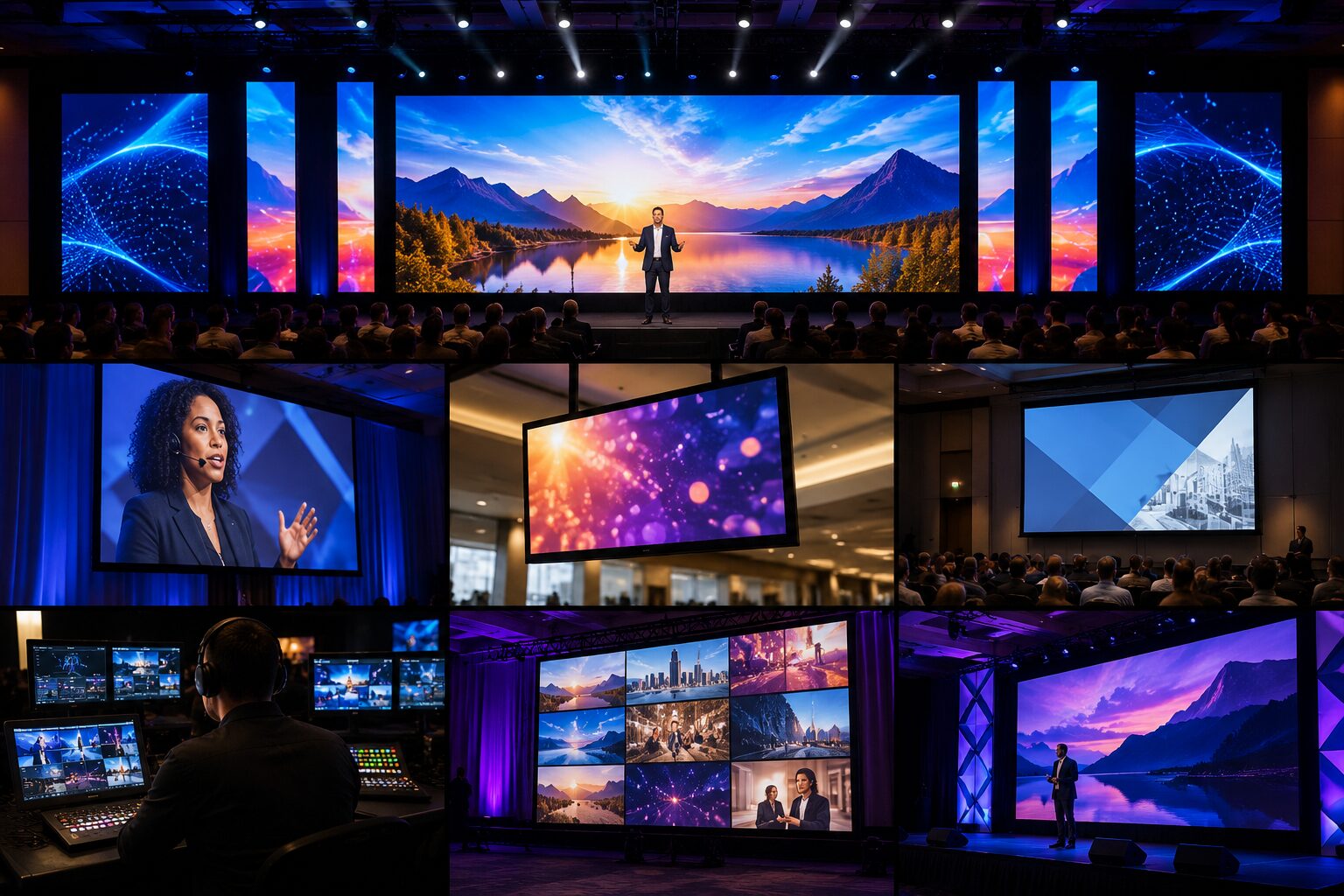
Modern event LED walls are assembled from modular panels, allowing production teams to build displays around the dimensions and creative requirements of a stage. Because the LEDs produce their own light rather than relying on reflected projector light, LED displays can remain vibrant in environments with substantial ambient or stage lighting.
More importantly for event planners, the LED wall can become both your video display and part of your scenic design.
That’s a major distinction.
Instead of building a backdrop and then figuring out where to put screens, the screen itself can become the backdrop.
Advantage #1: Your Stage Can Change Throughout the Event
Imagine you’re producing a corporate sales summit. As attendees enter, the LED wall displays a subtle animated company logo. When the meeting begins: 3… 2… 1…
A dramatic countdown fills the screen. The opening video plays. Then the wall transitions into the company’s branded keynote background.
Later, it displays charts and presentation slides. During an executive panel, the background changes again. During the awards presentation, each recipient’s name, photograph, and accomplishments appear behind them.
And at the evening reception, the wall becomes an animated scenic element.
One stage. Multiple completely different looks.
That’s one of LED’s biggest advantages over a traditional scenic backdrop.
Phoenix Technology Audio Visual has previously highlighted this same capability: an LED wall can transition between animation, sponsor recognition, live fundraising information, scenic imagery, branding, and other content throughout an event.
Advantage #2: Sponsor Recognition Becomes Much More Powerful
For nonprofit galas, Chamber events, conferences, and fundraising programs, sponsors can represent a significant portion of the event’s revenue. An LED wall gives planners considerably more flexibility in how those sponsors are recognized.
Instead of squeezing twenty logos onto one printed banner, you can create rotating sponsor slides, individual sponsor moments, animated logo sequences, branded walk-in content, and recognition during specific portions of the program.
For example, imagine a fundraising gala with four sponsorship levels. During cocktail hour, logos can rotate elegantly on screen. Before dinner, premier sponsors receive individual recognition.
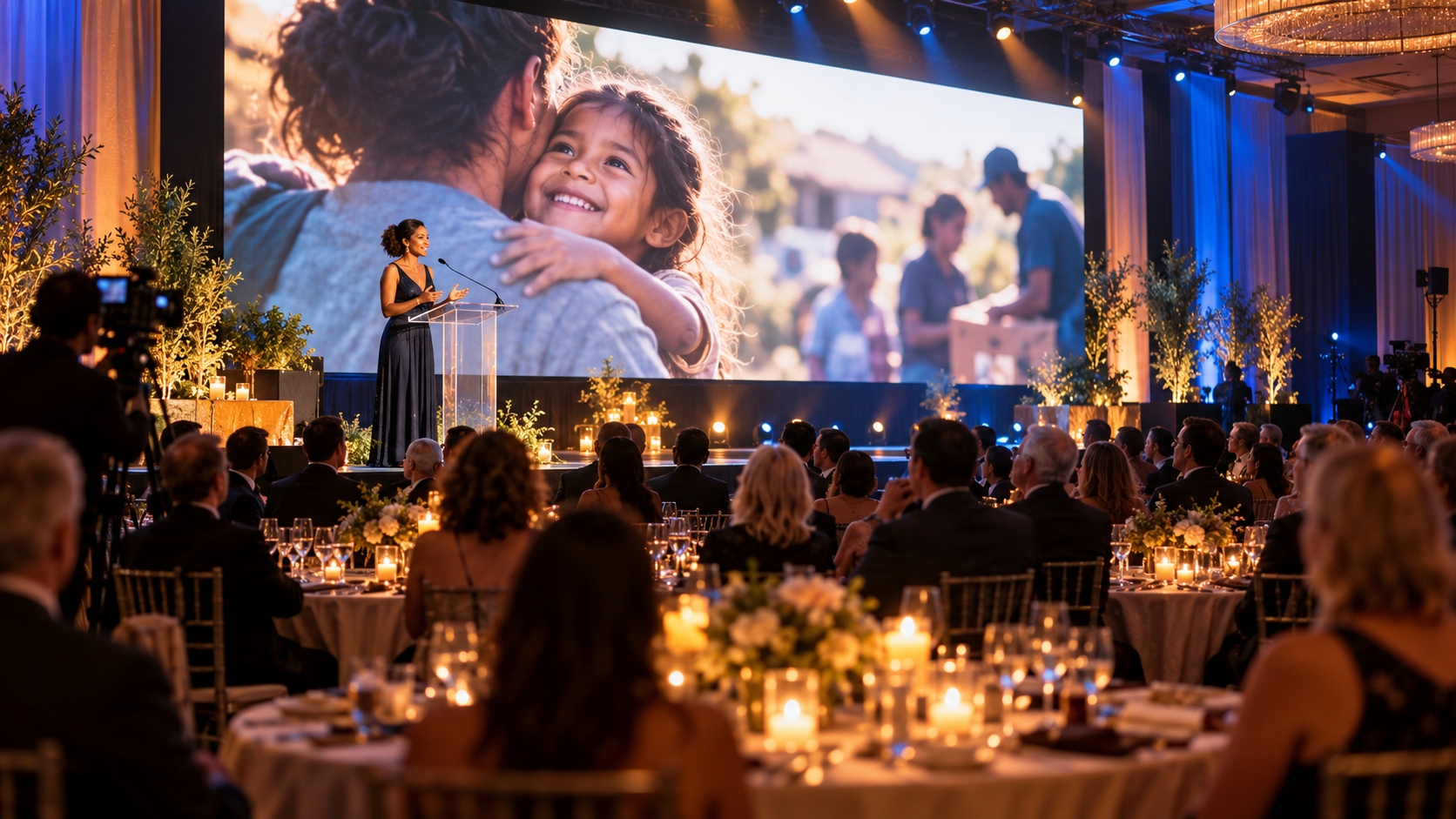
During the fundraising appeal, the wall transitions into mission-driven imagery. During awards, the visual design changes again. You’re using the same physical display while delivering entirely different messages.
Advantage #3: LED Walls Can Handle Bright Rooms
This is especially important for corporate meetings. Traditional projection relies on light reflecting from a surface, so ambient light competes with the projected image. LED displays generate their own light and therefore perform much better when the room cannot be made dark.
Think about an afternoon corporate summit inside a hotel ballroom. Your CEO wants enough house light for attendees to take notes. Your cameras need appropriate stage lighting. The event planner doesn’t want everyone sitting in darkness at 2:00 in the afternoon.
An LED wall gives the lighting designer considerably more freedom because the production doesn’t have to darken the entire room just to protect the presentation image.
Advantage #4: Incredible Branding Opportunities
Corporate events have increasingly become extensions of a company’s brand.
Your stage may appear in:
- LinkedIn posts
- Instagram Reels
- Press photographs
- Marketing videos
- live-streams
- Recruiting content
- Sales materials
- Post-event highlight reels
That makes the visual background incredibly valuable.
A properly designed LED wall can incorporate your organization’s colors, logos, animation, photography, video, and event theme into one cohesive environment.
Instead of merely displaying your brand, the stage becomes your brand.
Advantage #5: Live Cameras Become Part of the Experience
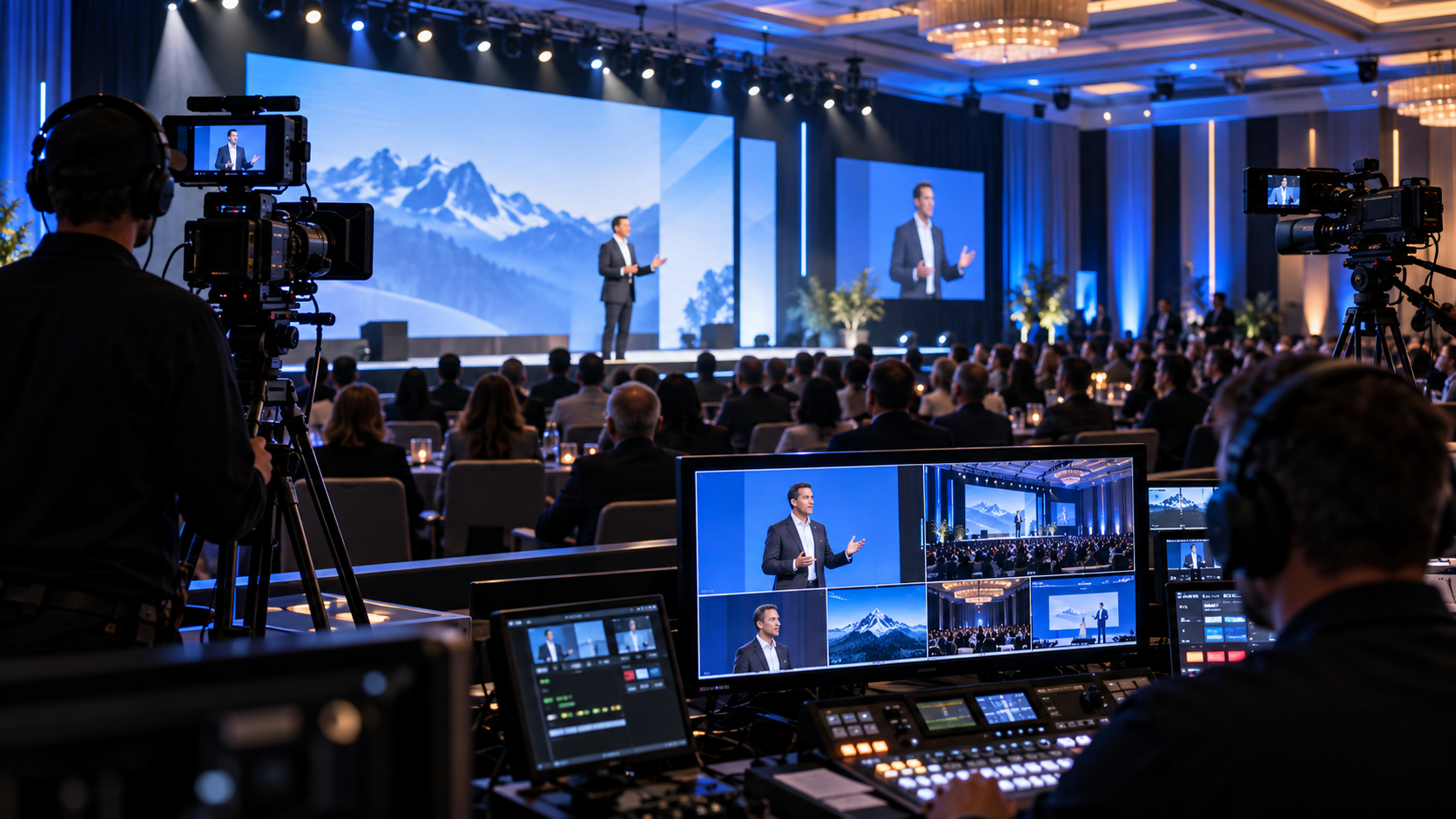
This becomes especially valuable with large audiences. When you have hundreds—or potentially thousands—of people in a room, attendees near the back may struggle to see a speaker’s facial expressions. That’s where IMAG (Image Magnification) comes into play.
Professional cameras capture the presenter, and that live camera feed can be displayed on the LED wall or accompanying screens. Suddenly, the guest sitting 150 feet from the stage can still see the speaker’s expressions and reactions.
LED walls are particularly well suited to events combining presentation graphics, video, motion graphics, and live camera feeds.
But LED Isn’t Automatically the Right Choice for Stage Design
We love LED walls at Phoenix Technology Audio Visual—but good event production isn’t about recommending the most impressive piece of technology every time. It’s about recommending the right solution.
LED walls generally require more setup time, labor, processing, support infrastructure, and technical planning than a simple scenic backdrop. Depending on the configuration and venue, rigging or ground-support considerations may also come into play. And remember: An LED wall needs good content.
If you’re going to invest in a spectacular digital canvas but display the same static logo for six hours, you may not be taking advantage of what you’ve paid for. Your content strategy should be part of the conversation.
Real-World Example: The Nonprofit Gala
Let’s imagine a nonprofit is hosting its annual fundraising gala for 400 guests.
Option A: Scenic Backdrop
The organization chooses elegant white scenic panels with blue uplighting and a beautifully lit podium. This might be perfect if the program consists primarily of dinner, speeches, and an awards presentation.
It’s elegant. It’s clean. It’s cost-conscious.
Option B: LED Wall
Now imagine the organization wants to show:
- Mission videos
- Sponsor recognition
- Live camera feeds
- Fundraising progress
- Donor photographs
- Animated backgrounds
- Award recipient graphics
Suddenly, LED becomes much more valuable.
Instead of simply decorating the stage, the display becomes part of the storytelling. For that event, the additional investment could dramatically enhance the guest experience.
Real-World Example: The Corporate Sales Summit
Now consider a two-day sales meeting. There are multiple executives, product demonstrations, sales statistics, videos, awards, guest speakers, and perhaps remote participants. In this situation, we’d strongly consider an LED wall because the content changes constantly.
Morning walk-in graphics become presentation slides. Slides become videos. Videos become IMAG. IMAG becomes an awards package. And the awards package becomes an evening reception backdrop.
The screen becomes a multi-purpose production tool rather than just decoration.
What About Combining the Two?
Here’s an option event planners sometimes overlook: You don’t necessarily have to choose.
Some of the most visually interesting stage designs combine LED technology with physical scenic elements. Imagine a large center LED wall surrounded by white scenic flats illuminated with blue uplighting.
Or an LED wall framed by branded scenic pieces. Or a central LED display with drape, greenery, architectural elements, or lighting treatments extending across the rest of the stage.
This hybrid approach gives you the flexibility of digital content while maintaining the depth and texture of a physical set.
Ask These Questions Before Making Your Decision
Before choosing your stage design, ask:
What does our audience need to see?
If presentations and video are central to the program, LED becomes much more valuable.
How important are sponsors?
If sponsor recognition drives event revenue, LED provides tremendous flexibility.
Will we have cameras or live-streaming?
Think about how your background will appear both in the room and on camera.
How bright is the venue?
Ambient light can dramatically affect certain display technologies.
How often does the stage need to change visually?
If your event moves through many different themes or program segments, digital scenic content can simplify those transitions.
What’s our budget?
Never sacrifice critical audio, staffing, or production fundamentals just to add a flashy screen.
What experience are we trying to create?
Ultimately, that’s the most important question.
Don’t do Stage Design for the Stage Itself—Design for the Guest
Whether you choose a scenic backdrop, an LED wall, or a combination of both, remember who you’re designing it for: Your guests.
A successful stage isn’t simply beautiful. It helps your audience see. It helps them hear. It reinforces your organization’s identity. It gives sponsors meaningful visibility. It supports your speakers.
And most importantly, it helps tell the story of your event. That’s why your stage design should be discussed with your production team early—not added as an afterthought a week before doors open.
Let’s Build a Stage Design Your Guests Will Remember
At Phoenix Technology Audio Visual, we understand that no two events are exactly alike. A nonprofit fundraising gala requires a different atmosphere than an executive summit. An awards banquet has different production needs than a national sales meeting. And a holiday celebration shouldn’t look like a corporate training session.
Our team can help you determine the right combination of LED walls, scenic elements, professional audio, stage lighting, video production, cameras, presentation management, live-streaming, and complete live event production to fit your venue, audience, goals, and budget. And if an LED wall is the right choice, we’d love to show you just how much you can do with it.
From dynamic corporate branding and cinematic opening videos to sponsor recognition, IMAG, fundraising content, awards graphics, and animated scenic backgrounds, Phoenix Technology Audio Visual can help turn your stage into the visual centerpiece of your entire event.
Your guests shouldn’t simply walk into another ballroom. Give them a reason to look up, take notice, and remember the experience.Ready to start planning?
Visit PhoenixTechAV.com and talk with Phoenix Technology Audio Visual about your next corporate summit, fundraiser, gala, conference, awards program, sales meeting, or special event. Click HERE to see some of the sets we have done with backdrops & LED walls. Give us a follow on FACEBOOK and LINKEDIN to see more amazing content like this!
Great stages don’t just sit behind your event. They help tell its story.