Planning a large-scale event can be an exhilarating experience, whether it’s a corporate conference, a nonprofit fundraiser, a gala, or a product launch. However, without meticulous planning and expert coordination, things can quickly spiral into chaos. From logistics and production to guest experience and technology, many elements need to work in harmony for your event to be a success.
Based on our experience as a full-service audio, visual, lighting, and set design company specializing in live events and livestream productions, here are the top 10 things to look out for when planning your next big event:
1. Clear Objectives and Vision
Before diving into logistics, be crystal clear about your event’s purpose. Is it to raise funds, celebrate a milestone, launch a new product, or bring stakeholders together? Your objectives will shape decisions around format, AV requirements, venue, and messaging.
Tip: Create a brief outlining key goals, target audience, expected outcomes, and brand tone. Share this with all vendors and stakeholders so everyone aligns with your vision.
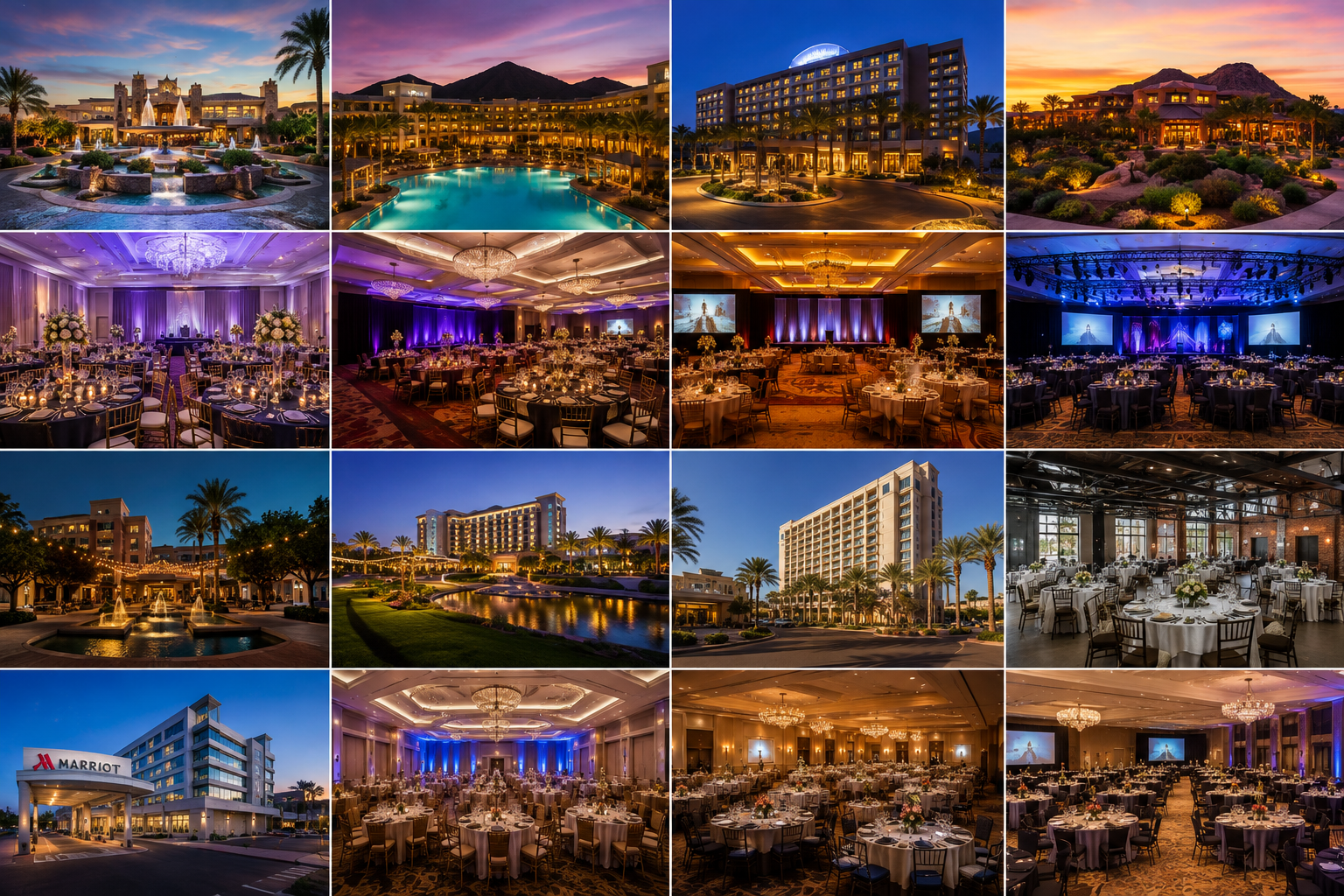
2. Choosing the Right Venue
The venue sets the tone and affects everything from capacity to AV logistics. Not all venues are created equal in terms of accessibility, acoustics, lighting, and equipment compatibility.
Watch out for:
- Ceiling height and rigging options for lighting/AV
- Power sources and load-in access
- Acoustics (echoes or dead zones)
- In-house restrictions on AV providers
Tip: Always visit the venue with your AV team beforehand to flag any technical challenges.
3. Reliable AV Production Partner (Like Phoenix Technology Audio Visual)
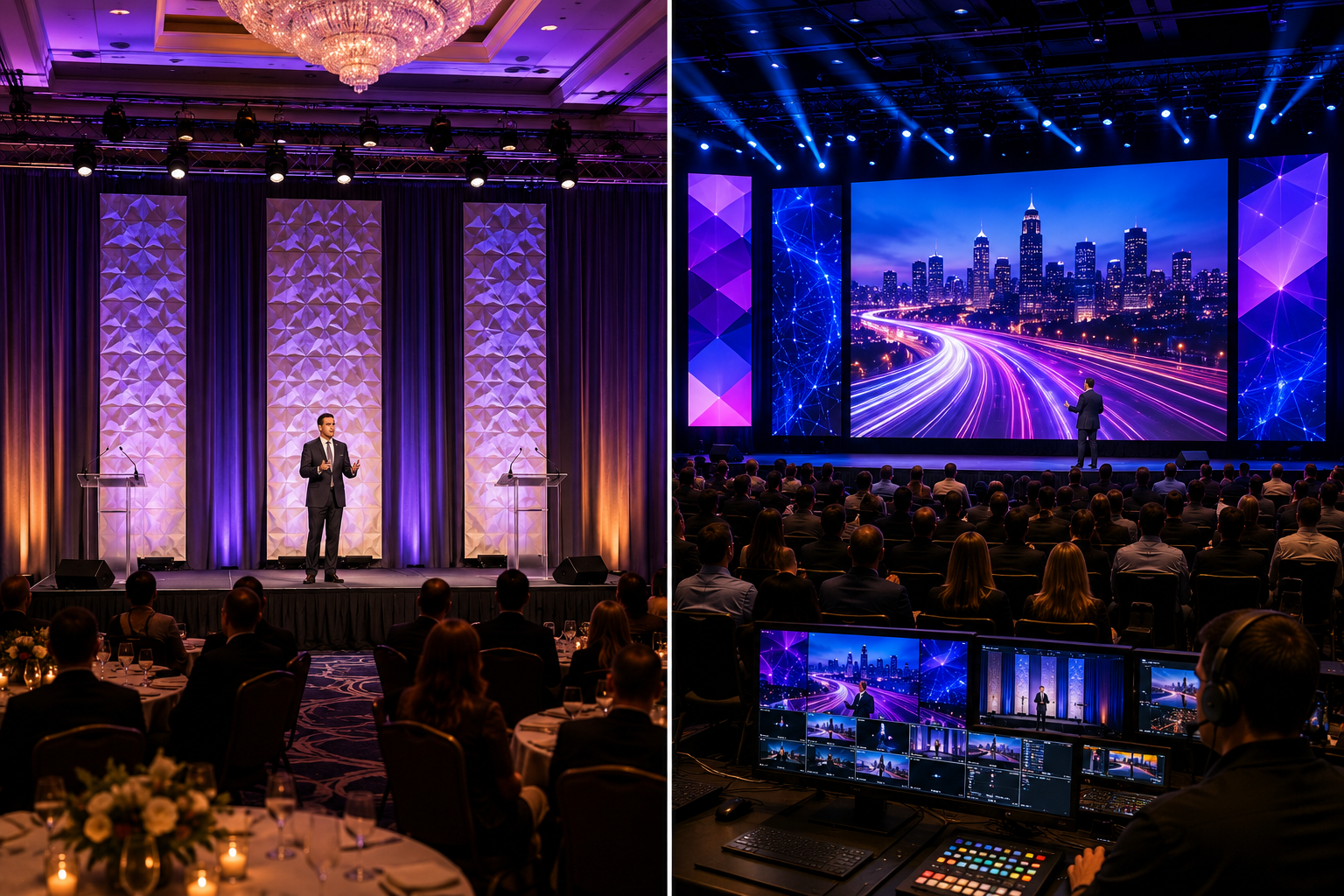
Your AV production partner is not just a vendor—they’re the behind-the-scenes team making your vision come to life. They handle sound, lighting, video, livestreaming, set design, and often technical direction.
Look for:
- Experience in events similar to yours
- A portfolio of past productions
- Full-service capabilities (not just rentals)
- Willingness to collaborate during pre-production and rehearsals
Tip: Choose a partner that offers both creative design and technical execution. One team handling everything ensures consistency and efficiency.
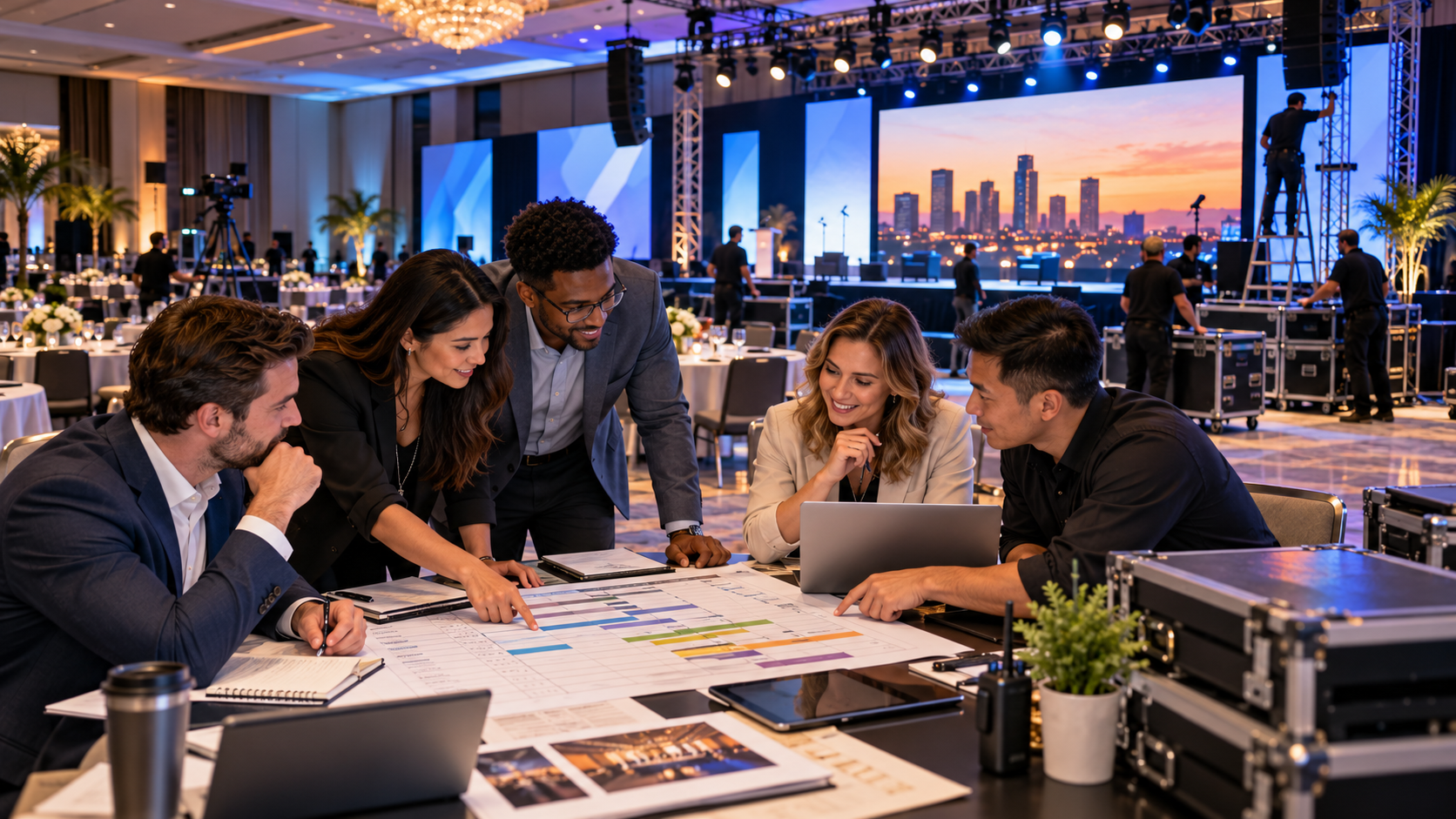
4. Comprehensive Timeline and Run of Show
A detailed event timeline is your bible on the day of the event. It should include setup times, rehearsals, cue points for lights and sound, speaker transitions, meal service, entertainment, and breakdown.
Tip: Work closely with your AV company and event planner to build the Run of Show down to the minute. Share this with every department to ensure seamless coordination.
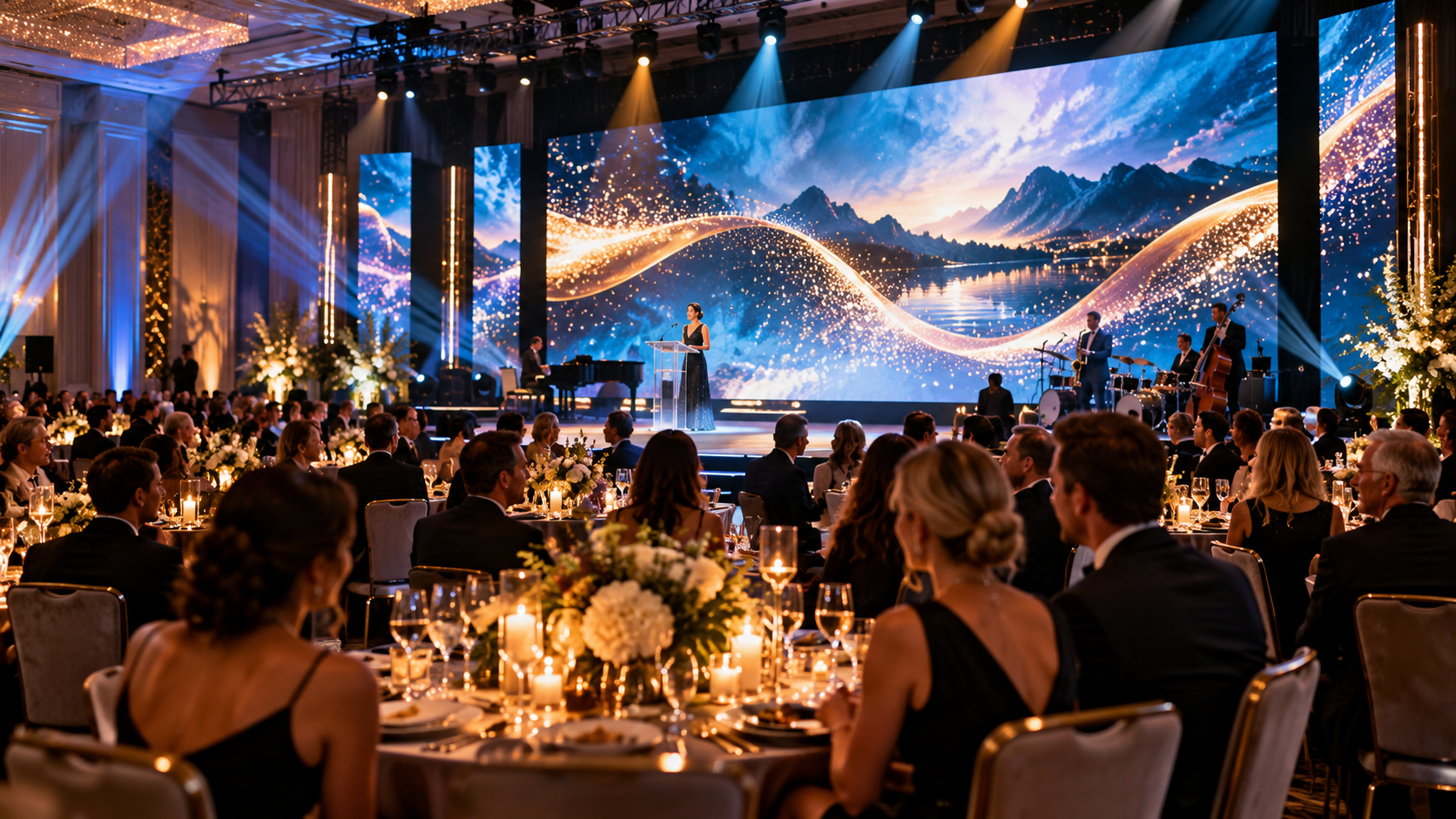
5. Sound Quality and Audio Planning
Poor audio can ruin an otherwise excellent event. Guests should never strain to hear a speaker or experience feedback during a performance.
Check for:
- Enough microphones (wired and wireless) for all presenters
- Monitors or in-ear systems for performers
- Speaker placement for even room coverage
- Backup systems in case of interference
Tip: Always schedule a full sound check with all key participants present.
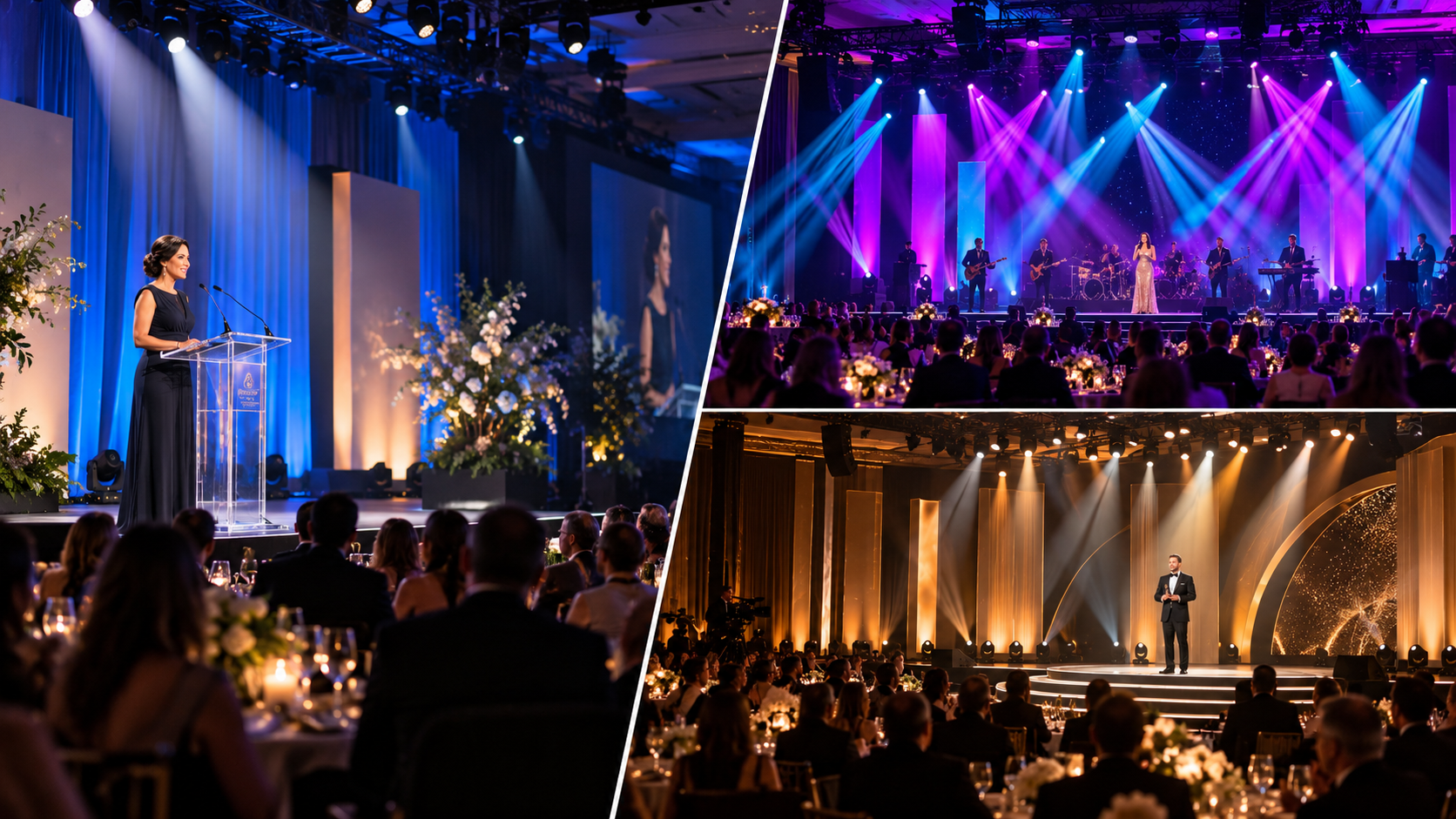
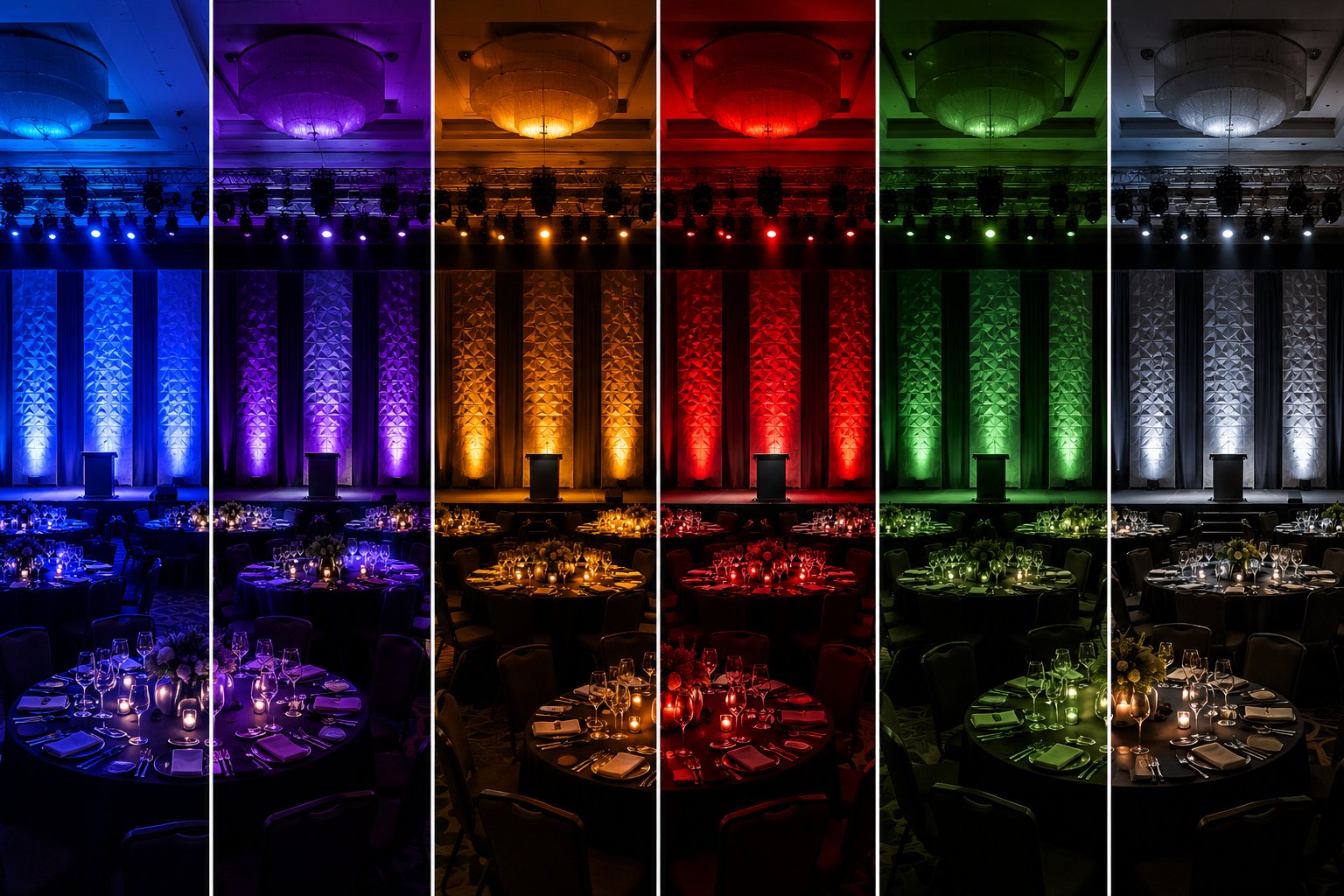
6. Lighting Design for Impact
Lighting influences mood, focus, and energy in the room. Whether you’re going for elegance or high-tech, lighting can make or break the guest experience.
Consider:
- Uplighting to enhance walls and décor
- Spotlights for speakers and awards
- Color schemes that match branding
- Lighting transitions to guide the event flow
Tip: Don’t underestimate the power of lighting in photos and video. Well-lit environments look far more professional on social media and livestreams.
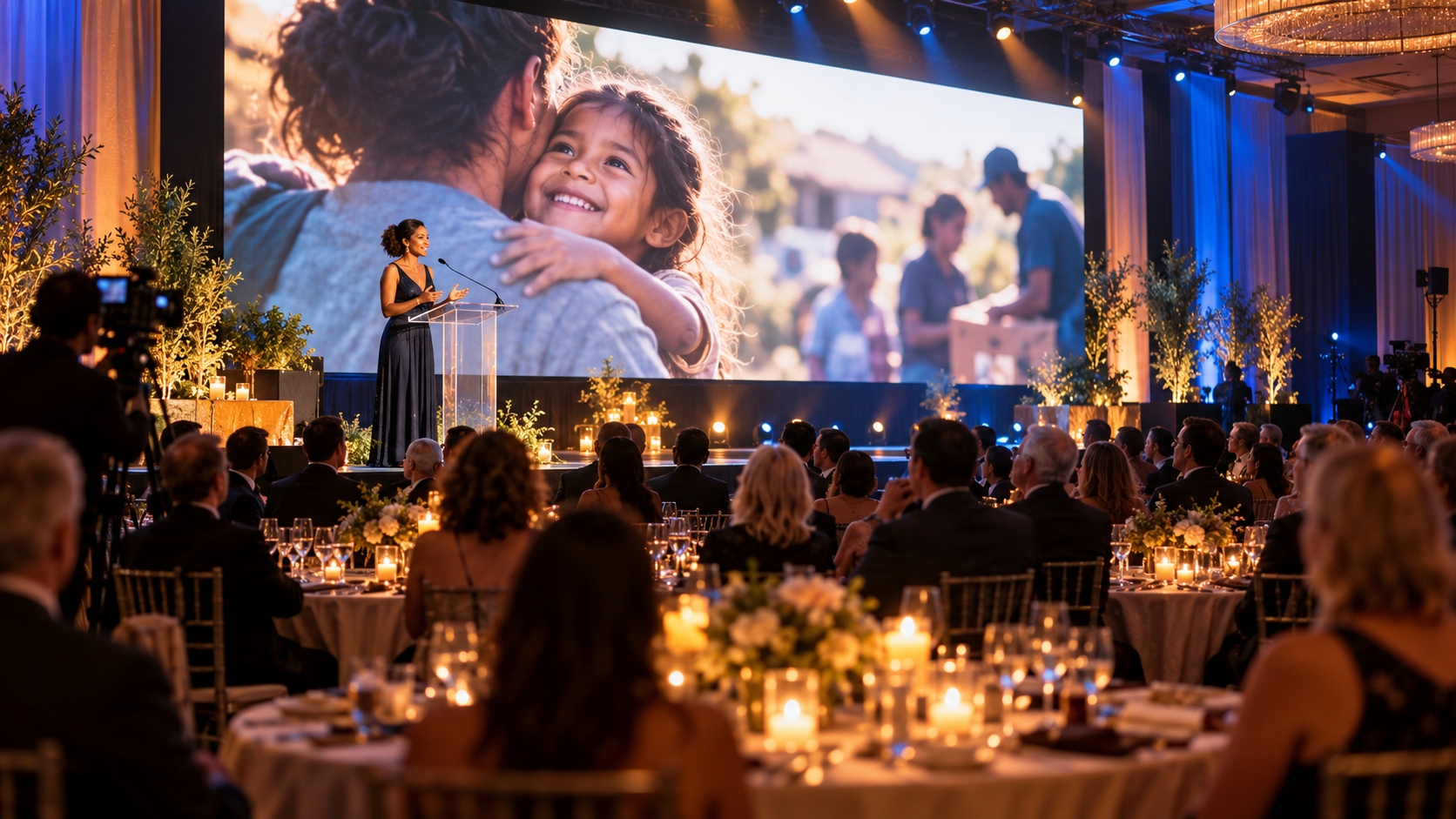
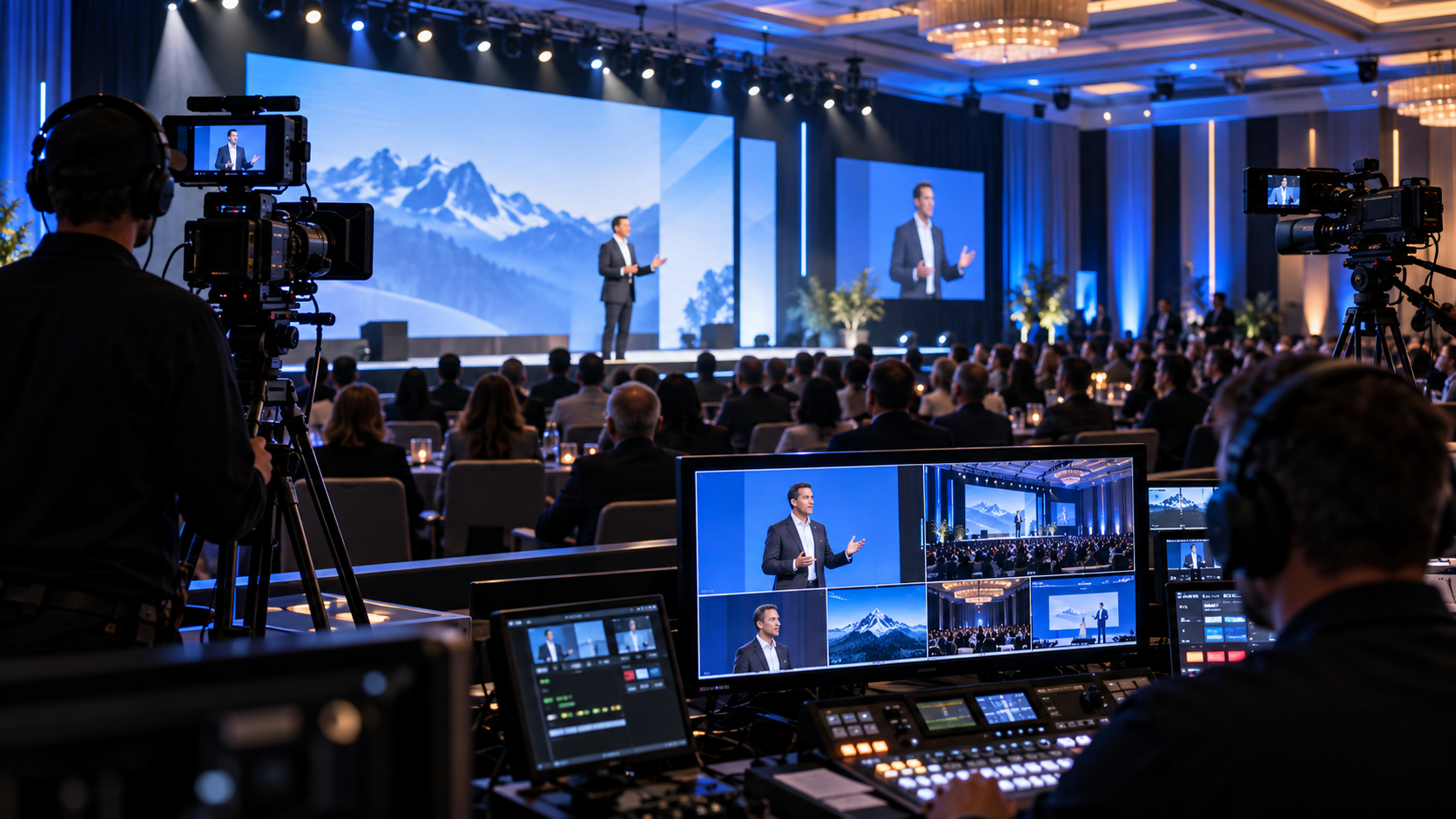
7. Livestreaming and Hybrid Capabilities
In today’s digital age, many events benefit from being livestreamed or recorded. This extends your reach, accommodates remote audiences, and creates reusable content.
Look out for:
- Reliable internet bandwidth and hardwired connections
- Multi-camera setups with switching
- Live captioning or accessibility features
- Integrated donation or engagement tools (for fundraisers)
Tip: Promote your livestream in advance and integrate social media into your broadcast.
8. Backstage & Technical Support
A polished front-of-house experience depends on a well-run backstage operation. Your AV team needs space to store gear, prep, and coordinate behind the curtain.
Prepare for:
- Green rooms or prep space for speakers/performers
- Power needs for backstage monitors and control stations
- Cue-based communication (e.g., clear-com headsets)
Tip: Include a walkthrough with your technical director to ensure the backstage setup won’t interfere with audience areas.
9. Contingency Planning
Even with the best planning, surprises happen. Weather, traffic, equipment issues, or speaker delays can all impact your event.
Plan for:
- Backup equipment (extra mics, cables, projectors)
- Backup media (pre-recorded videos in case live feed fails)
- Contingency schedules for weather delays
- Emergency contact list for key players
Tip: Have a “show caller” or production lead who can make real-time adjustments without derailing the event.
10. Post-Event Follow-Up and Content
Once the event ends, your work isn’t done. Use the momentum to maintain engagement, thank guests and sponsors, and repurpose event content.
Don’t forget:
- Send post-event thank-you emails
- Share recap videos and photos on social media
- Create blog posts or newsletters from the event content
- Gather feedback via surveys
Tip: Your AV team can provide edited video content, sizzle reels, and highlight clips that support future marketing.
Planning a successful event isn’t just about putting people in a room—it’s about creating an experience that resonates. With so many moving parts, having the right partners, tools, and strategies makes all the difference. As a full-service AV production company specializing in nonprofits, corporations, and high-impact events, we know what it takes to bring your vision to life. Whether you need help with livestreaming, audio, lighting, or full-scale production design, we’re here to help you make it unforgettable. So contact us today for a free quote!
Let’s make your next big event a flawless one.