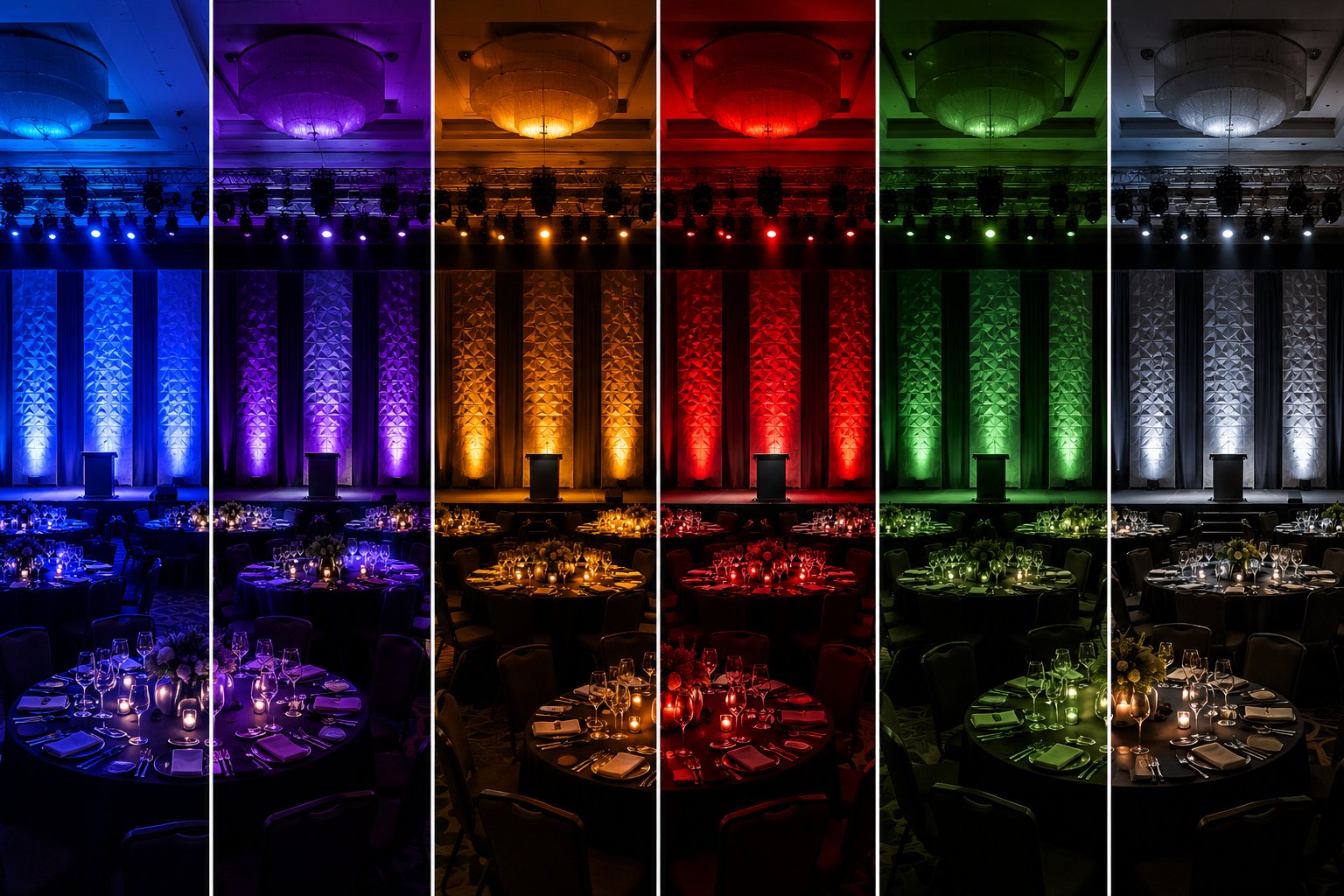
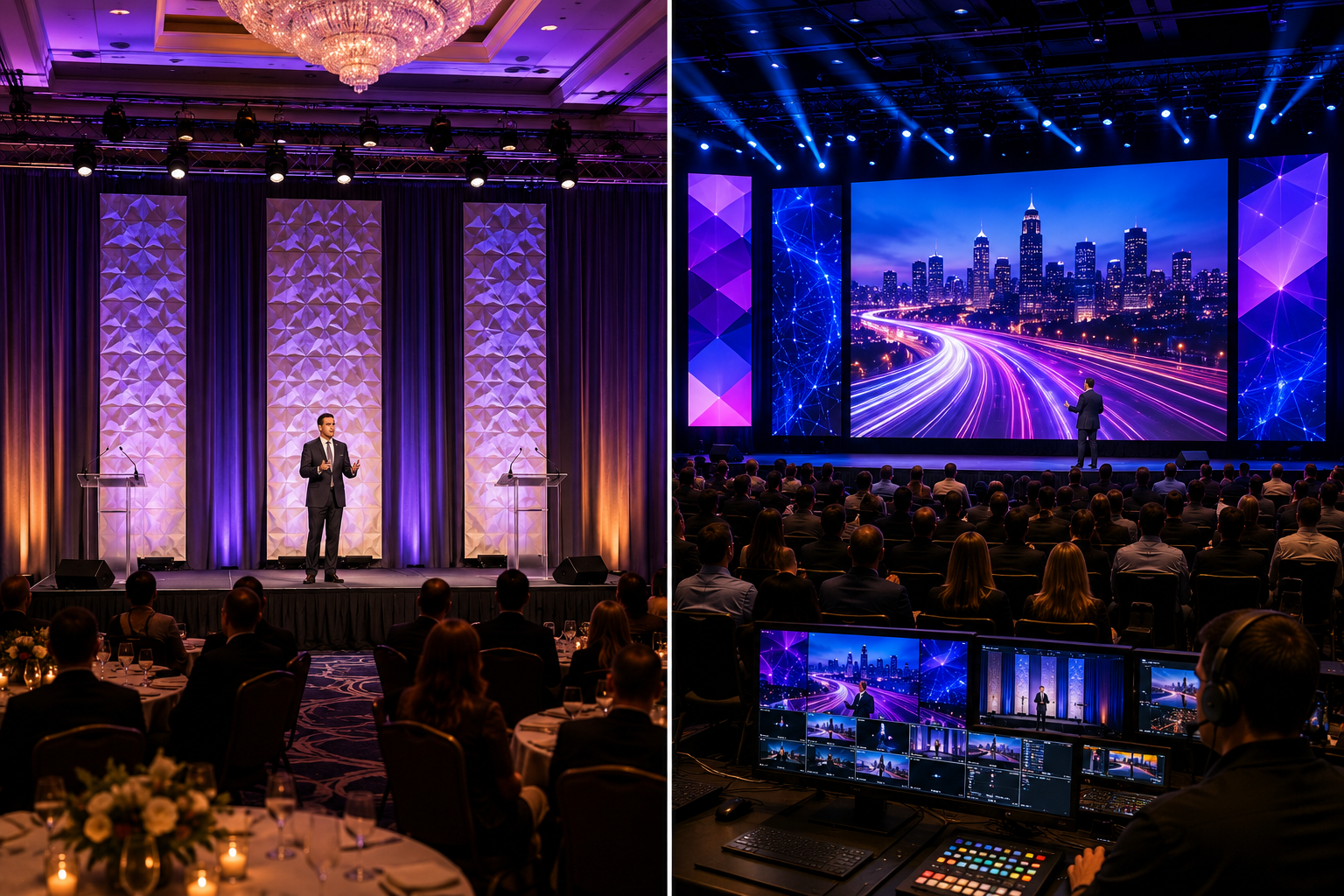
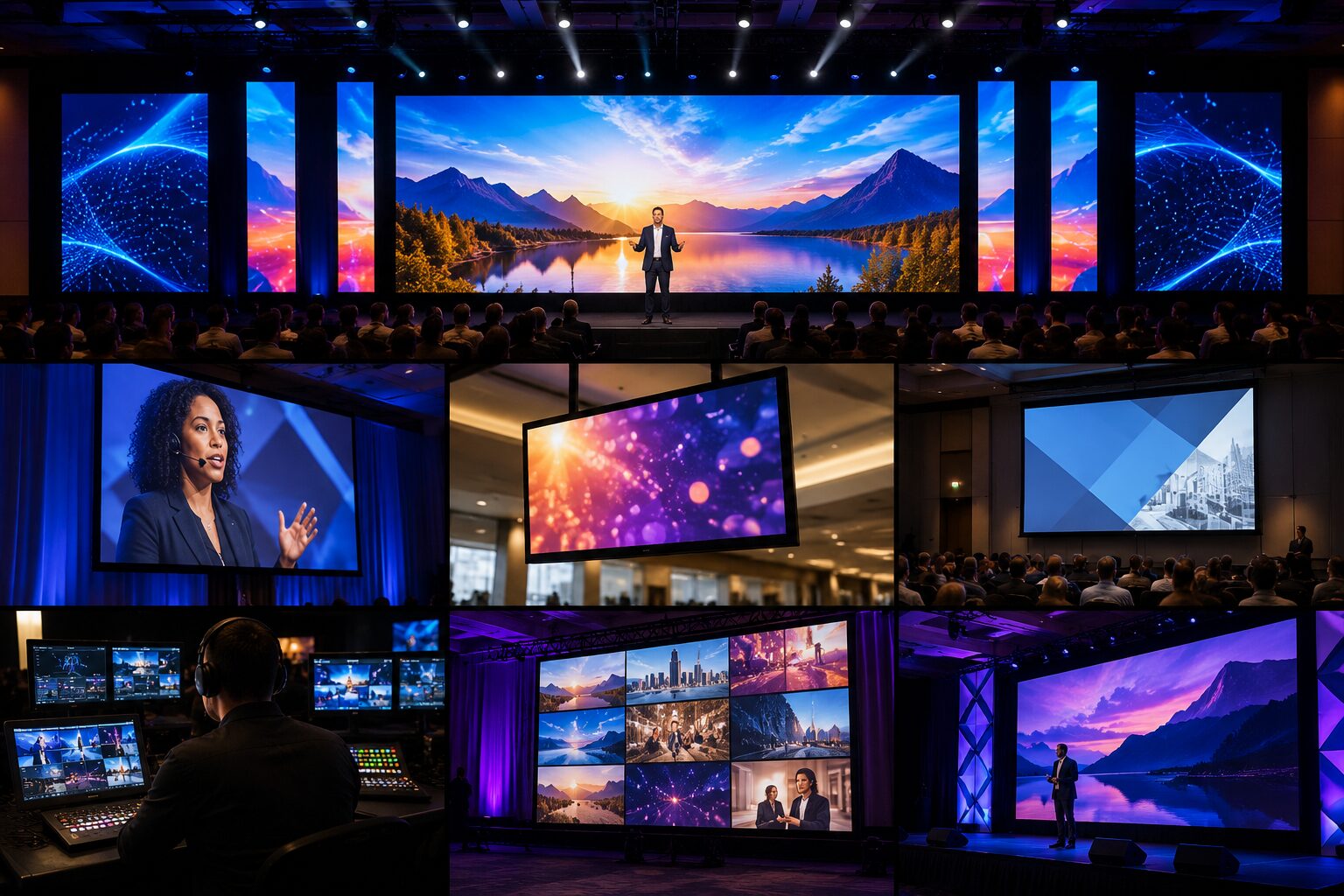
Choosing the right venue is one of the most critical decisions when planning an event. Whether it’s a gala, fundraiser, corporate summit, or sales meeting, the venue affects everything from audience experience to audio-visual setup and overall ambiance. At Phoenix Technology Audio Visual, we’ve worked in venues of every shape and size—ballrooms, warehouses, convention centers, outdoor pavilions, theaters, and beyond. Each comes with its own unique set of strengths and limitations.
In this blog, we’ll break down the pros and cons of different venue sizes and locations, and how those factors can impact your AV strategy, budget, and guest experience.
1. Small Venues (50–150 Guests)
Think boutique hotels, private dining rooms, loft spaces, or intimate halls.
Pros:
- Personalized Atmosphere: Smaller venues create closeness and warmth, which is great for building personal connections.
- Lower Costs: Venue rental, catering, staffing, and decor are typically more affordable.
- Less Tech Required: Smaller spaces usually need fewer lighting fixtures, screens, or speakers, making AV setups more manageable.
Cons:
- Limited Space for Equipment: There may not be room for full-scale lighting rigs, camera setups, or stage decor.
- Audio Challenges: Sound can easily become overpowering or echoey without proper acoustic treatment.
- Less Flexibility: Fewer options for breakout spaces or staging areas for performers, catering, or production crews.
Best For: VIP receptions, donor dinners, internal corporate updates, or micro-conferences.
2. Mid-Sized Venues (150–500 Guests)
Includes hotel ballrooms, university halls, mid-sized theaters, and community centers.
Pros:
- Ideal Balance of Space and Intimacy: Big enough for energy and networking, but still allows for connection.
- Versatility: Can accommodate multiple AV zones—stage, presentation screens, cocktail areas.
- Scalable Production: You can implement a robust audio-visual plan without overextending the budget.
Cons:
- Load-In Logistics: These venues may be in buildings with tight loading docks or limited parking for equipment transport.
- Inconsistent Infrastructure: Some venues have outdated or minimal in-house AV capabilities, requiring more rented gear.
- Acoustic Wildcards: If not designed for events, sound may bounce, especially in gymnasium-like or open-ceiling spaces.
Best For: Fundraisers, corporate meetings, mid-tier galas, hybrid panels, or brand launches.
3. Large Venues (500+ Guests)
Convention centers, large theaters, arenas, or multipurpose halls & ballrooms.
Pros:
- Professional Infrastructure: These venues could have built-in lighting grids, rigging points, and power sources.
- Room to Innovate: Space allows for elaborate stage design, projection mapping, video walls, or immersive audio systems.
- Multi-Use Layouts: Great for conferences that need breakout rooms, exhibit halls, and a main plenary space.
Cons:
- Higher Costs: Rental fees, insurance, security, and union labor can increase significantly.
- Lost Intimacy: Large rooms can feel impersonal if the crowd is too spread out.
- Technical Complexity: Requires more professional AV coordination to manage camera feeds, livestreaming, audience mics, and lighting.
Best For: Sales summits, national conferences, major donor galas, and public-facing campaigns.
4. Outdoor Venues
Rooftop gardens, courtyards, vineyards, public parks, or private lawns.
Pros:
- Scenic and Unique: Natural lighting, landscapes, and fresh air make a strong first impression.
- Built-In Themes: Easier to brand or style events with seasonal or nature-inspired decor.
- High Guest Appeal: People enjoy open-air environments, especially for evening events.
Cons:
- Weather Dependence: Rain, wind, heat, or cold can disrupt even the best-laid plans.
- Technical Limitations: No in-house AV—requires full equipment transport, power sourcing (generators), and lighting rigs.
- Permits and Logistics: Noise ordinances, crowd control, and permits must be handled carefully.
Best For: Spring/summer fundraisers, open house events, product reveals, or community-focused celebrations.
5. Unconventional Spaces
Warehouses, art galleries, aircraft hangars, sound stages, or historical buildings.
Pros:
- Creative Edge: Unique, blank-canvas environments stand out and allow for full creative control.
- Immersive Production: Perfect for custom stage designs, dramatic lighting, and unique AV setups.
- High Engagement: Guests often talk about the space just as much as the event content.
Cons:
- Built from Scratch: Everything must be brought in—from power to furniture to rigging.
- AV Customization Required: No plug-and-play; everything needs to be tailored and tested.
- Environmental Controls: Heating, cooling, and soundproofing may be minimal or non-existent.
Best For: High-concept galas, branded activations, tech product launches, and influencer events.
Final Thoughts
Every venue comes with its own character, challenges, and creative potential. What’s most important is aligning your venue choice with your event goals, audience expectations, and production needs. A gorgeous rooftop may dazzle visually but wreak havoc on sound without the right AV prep. A massive convention hall may offer scale, but requires careful design to avoid feeling empty or disconnected.
At Phoenix Technology Audio Visual, we collaborate with event planners, nonprofits, and corporate clients to maximize each venue’s potential. From evaluating acoustics and power access to designing scalable lighting and video systems, our team ensures that no matter where your event is, your message shines.
Need help assessing your next venue? Let’s walk the space together and build a custom AV plan that brings your vision to life!