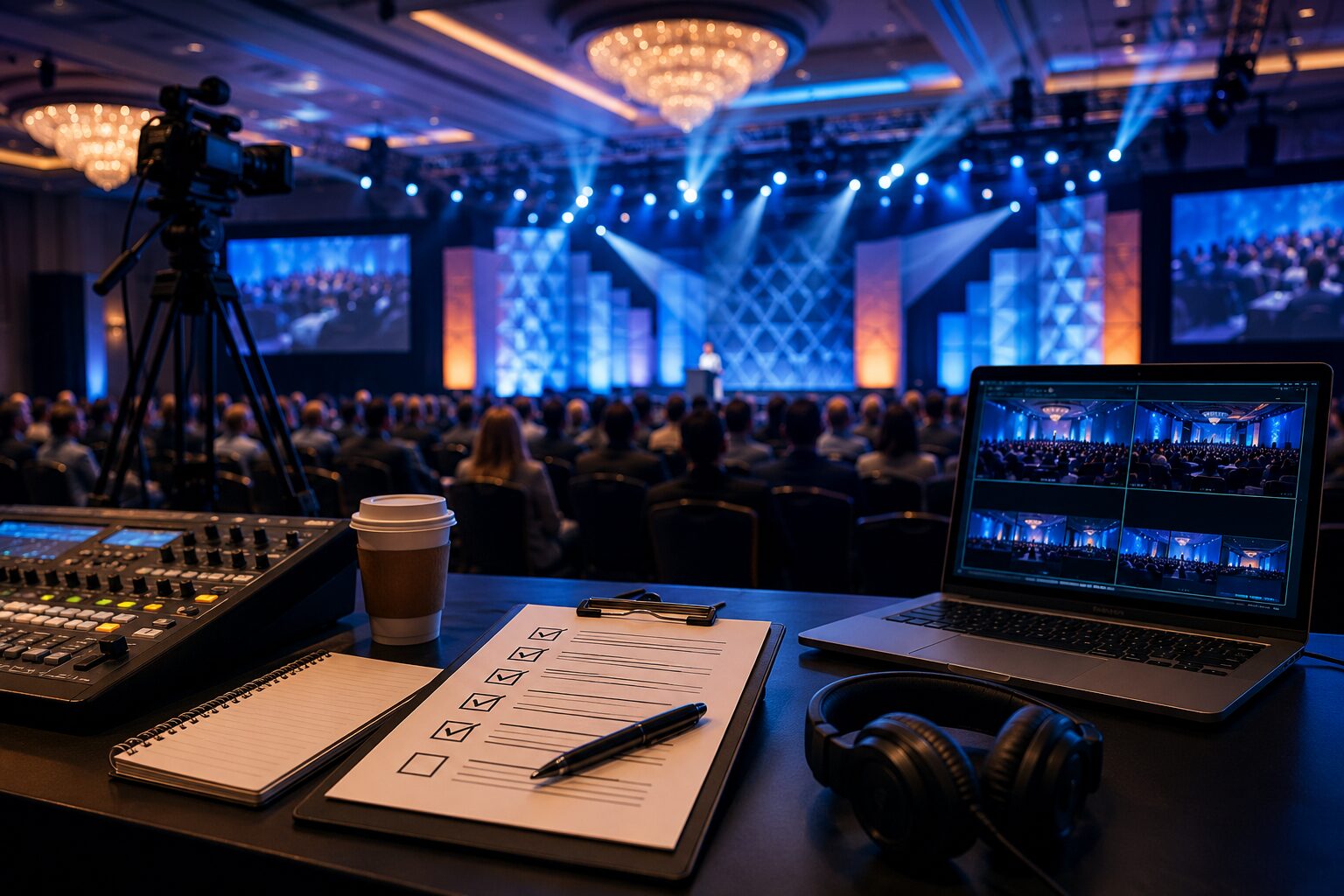
How the Right Lighting Color Can Change the Way Your Guests Feel, Focus, and Experience Your Event
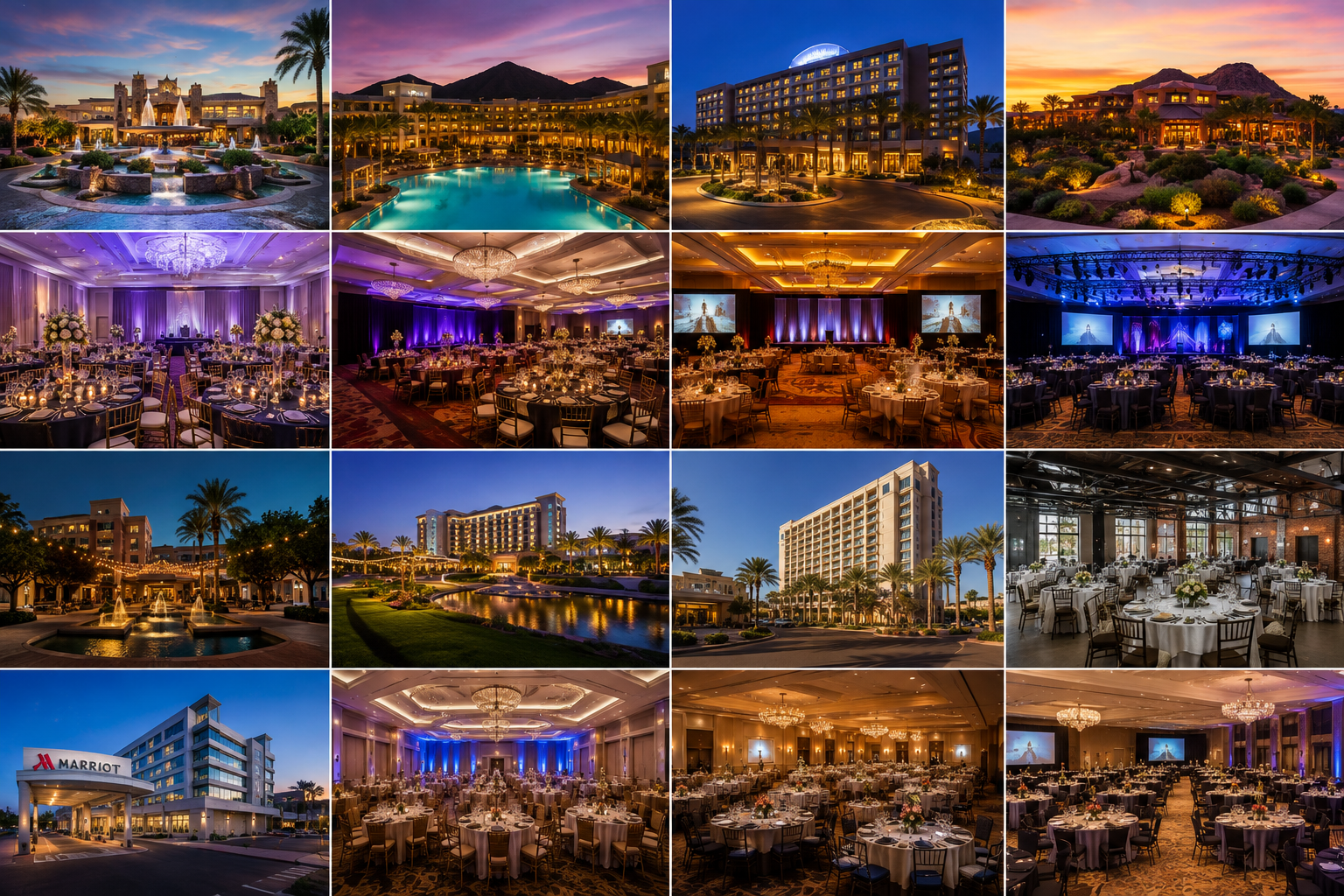
Walk into two identical hotel ballrooms and you can have two completely different emotional reactions. The first room is brightly illuminated with cool white light. The stage is crisp, the room feels energetic, and everything communicates: We’re here to do business.
Walk into that same ballroom later that evening. The overhead lights have been lowered. Warm amber uplighting illuminates the walls, soft gold highlights the centerpieces, and deep blue accents frame the stage. Suddenly, it doesn’t feel like a conference anymore.
It feels like a gala. The room didn’t change. The lighting did.
That’s one of the most powerful—and sometimes underestimated—tools available to event planners. Lighting isn’t simply about making sure your guests can see. It can influence atmosphere, direct attention, reinforce branding, separate different portions of a program, and help create the emotional tone you want your guests to experience.
At Phoenix Technology Audio Visual, lighting is an important part of the complete event-production experience we provide alongside professional audio, video, LED walls, content, and live production. Our own lighting philosophy emphasizes that the right configuration depends on the event’s purpose, audience, environment, and desired atmosphere.
So, what exactly do different colors communicate—and how can event planners use them strategically? Let’s turn down the house lights and take a look.
Color Lighting Psychology Isn’t a Magic Formula
Before discussing individual colors, there’s an important distinction to make. Color psychology isn’t as simple as: Blue = trust. Red = excitement. Green = calm.
People’s responses to color can depend on culture, context, personal experiences, surrounding colors, brightness, saturation, and what else is happening in the environment. A deep red ballroom during an elegant awards dinner can feel luxurious.
That same red used at full intensity with fast-moving lights and loud music can feel energetic or dramatic. In other words, context matters.
For event planners, that’s actually good news. It means lighting isn’t about memorizing a chart of “correct” colors. It’s about choosing a palette that supports the story you’re trying to tell.
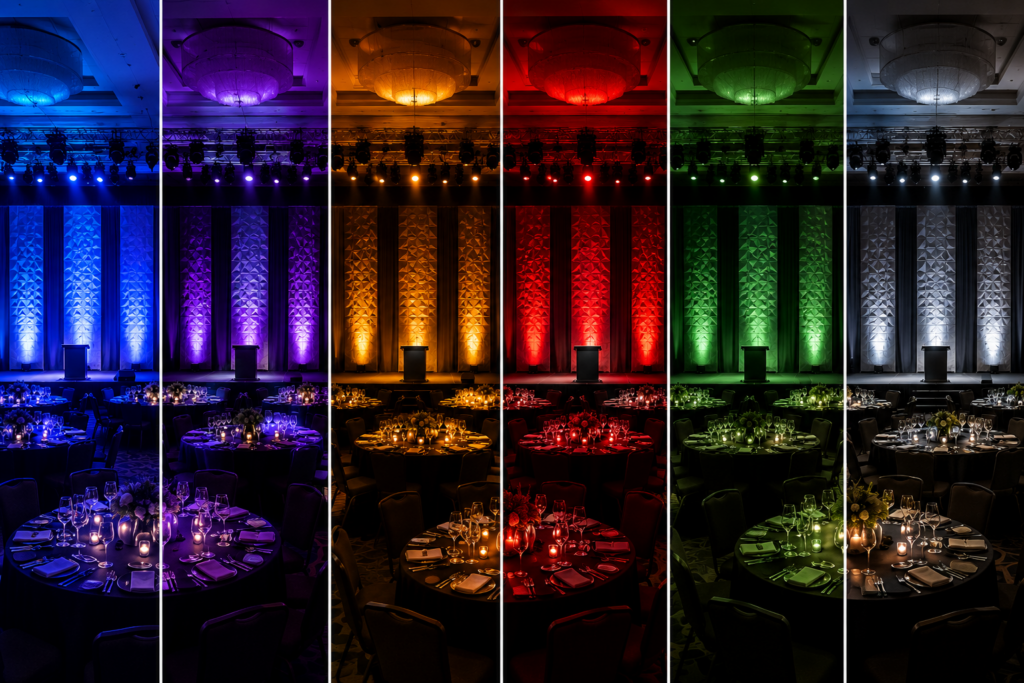
BLUE: Professional, Calm and Dependable
There’s a reason blue appears so frequently at corporate events. Blue can communicate professionalism, stability, confidence, and calm without drawing excessive attention to itself. It’s also incredibly versatile.
Phoenix Technology Audio Visual has previously recommended cool blues and soft purples for conferences, keynote sessions, and executive meetings because they can create a professional environment while adding visual interest to otherwise neutral meeting spaces.
Real-World Example: Corporate Leadership Summit
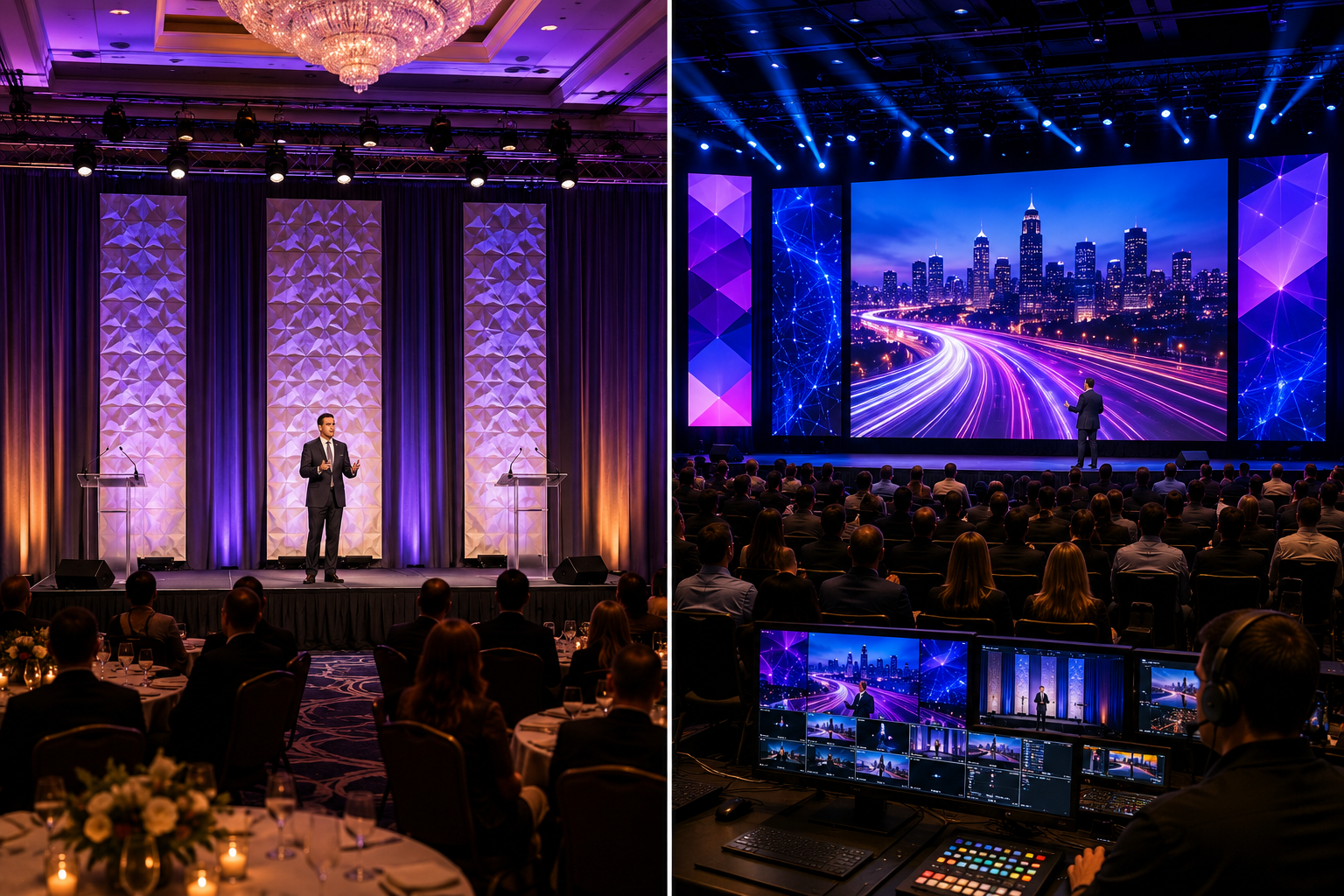
Imagine a technology company hosting its annual leadership summit. The stage features a large LED wall displaying corporate content. Blue uplighting runs across the ballroom walls while darker blue lighting accents scenic panels surrounding the stage.
The presenters themselves are illuminated with neutral front light. That’s important. You don’t necessarily want the CEO’s face illuminated bright blue. Instead, blue becomes the environment, while proper white stage lighting keeps the presenter natural and camera-friendly.
The result feels modern, technological, professional, and intentional.
PURPLE: Creative, Premium and Dramatic
Purple is particularly useful when you want an event to feel upscale without relying entirely on warm colors. Deep purples can create drama and sophistication, while lighter lavender tones can feel creative and contemporary.
Purple also blends beautifully with blue, magenta, and warm white.
Real-World Example: Awards Dinner
Imagine an annual business awards ceremony. During cocktail hour, the ballroom is illuminated with soft purple uplighting. As guests enter the main program, the stage combines deep violet scenic lighting with warm white illumination on the podium and awards.
When an award recipient is announced, moving lights introduce subtle gold accents. Now the lighting isn’t merely decorating the room.
It’s helping signal that something important is happening.
AMBER & WARM WHITE: Elegant, Comfortable and Inviting
If you’re planning a fundraiser, black-tie gala, donor dinner, or awards ceremony, warm white and amber are incredibly useful. These tones can create an atmosphere reminiscent of candlelight and are especially effective when combined with elegant table décor.
Phoenix Technology Audio Visual has previously recommended warm white and amber palettes for fundraisers, award ceremonies, and formal dinners because of their inviting, sophisticated character.
Real-World Example: Nonprofit Fundraising Gala
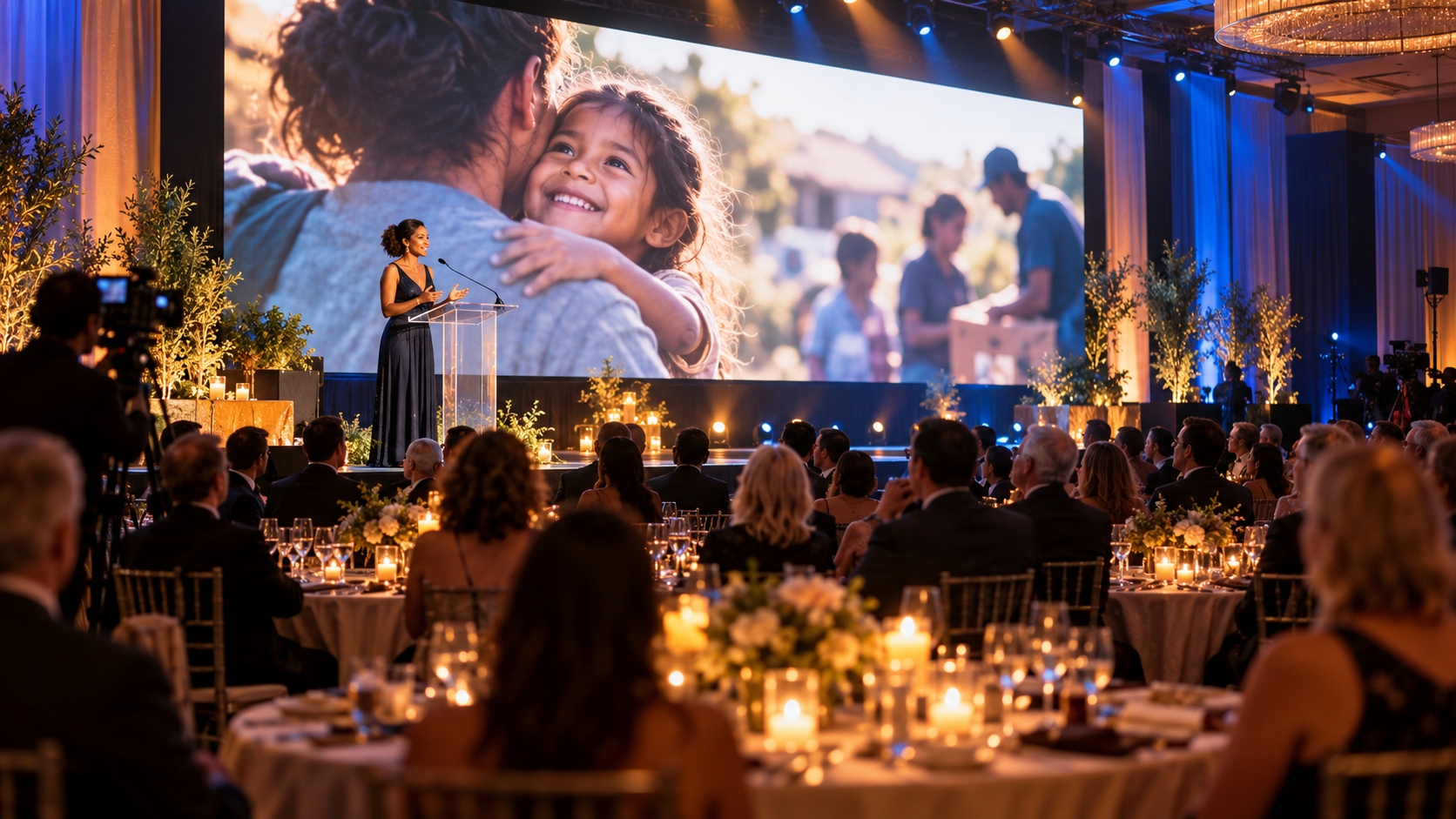
Picture 500 guests entering a hotel ballroom. Warm amber uplights illuminate the perimeter walls. Pin spots highlight floral centerpieces. Soft white stage lighting illuminates the podium.
Warm decorative lighting accents the silent-auction displays. The goal isn’t to overwhelm the guests with color. The goal is to make the room feel welcoming and special.
Later, when the fundraising portion begins, the lighting can subtly change. The room becomes darker. Attention shifts toward the stage. The LED wall begins showing the nonprofit’s mission video.
Suddenly, the production is directing everyone’s emotional and visual attention toward one moment. That’s lighting design working together with storytelling.
RED: Powerful—But Use It Intentionally
Red is visually powerful. It can communicate energy, passion, urgency, excitement, or drama. That makes it fantastic for certain moments—but potentially overwhelming when used everywhere.
Imagine illuminating an entire corporate conference room in saturated red for eight hours. That’s probably not the experience most planners want. Instead, red can work exceptionally well as an accent or transition color.
For example, during a sales kickoff, the ballroom might use professional blue lighting throughout presentations. Then the opening hype video begins.
The lights shift. Red accents appear. Music builds. The keynote speaker walks onto the stage. That color change tells the audience:
Something different is happening now.
GREEN: Fresh, Natural and Purposeful
Green can be particularly effective for organizations associated with sustainability, health, environmental initiatives, outdoor industries, agriculture, or growth. Imagine an energy company discussing a new sustainability initiative.
Rather than simply putting a green logo on the LED wall, you could subtly incorporate green lighting into scenic elements around the stage. Now the physical environment supports the message being delivered on screen.
Green also works beautifully alongside natural scenic elements such as plants, wood textures, and organic stage designs. The important thing is restraint. You generally want green illuminating the environment, not making your presenters look like they’re visiting from another planet.
WHITE: Clean, Modern and Extremely Useful
White might sound boring. It isn’t. White is one of the most important colors in professional event lighting because it creates contrast and visual clarity.
Phoenix Technology Audio Visual has previously highlighted white scenic surfaces as especially versatile because programmable lighting can completely change their appearance throughout an event.
Imagine white scenic flats behind a stage. During registration:
- Blue.
During the keynote:
- Corporate blue and white.
During dinner:
- Warm amber.
During awards:
- Purple and gold.
During the after-party:
- Dynamic saturated colors.
The scenic structure hasn’t moved an inch. Lighting has effectively given you five different stage designs.
Lighting Can Tell Guests Where to Look
Color isn’t only about emotion. It’s also about attention. We humans tend to naturally notice contrast. If the entire room is relatively dark but one presenter is brightly illuminated, your eyes naturally move toward that person.
This is why professional productions often separate lighting into layers. You might have:
- Stage Wash — Ensures presenters can be clearly seen.
- Lekos/ellipsoids — Provide precise illumination for podiums, speakers, or specific areas.
- Uplighting — Adds color to walls, columns, drape, or scenic elements.
- PAR Fixtures — Provide broad color washes and accents.
- Pin Spots — Highlight centerpieces, awards, signage, or décor.
- Moving Lights — Add motion and energy during openings, entertainment, awards, or transitions.
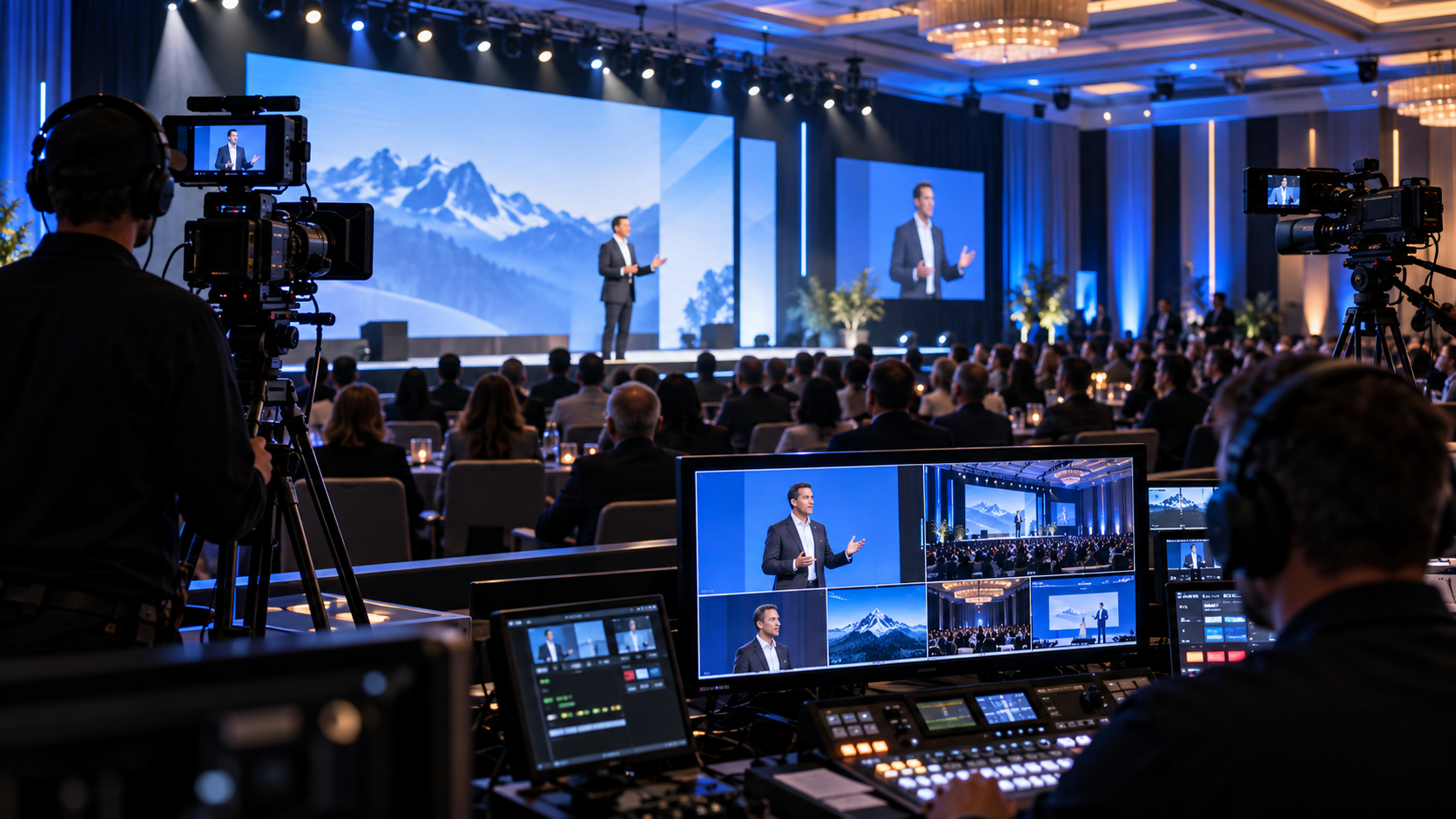
- Video Lighting — Provides flattering, camera-friendly illumination for presenters being recorded or livestreamed.
The magic happens when these layers work together.
Don’t Forget About Cameras
Here’s something every modern event planner should consider: Your lighting needs to look good twice.
Once to the people sitting in the ballroom. And again to the camera.
Your event may ultimately appear on:
- YouTube
- TikTok
- Livestreams
- Promotional videos
- Sponsor recap videos
- Company websites
- News coverage
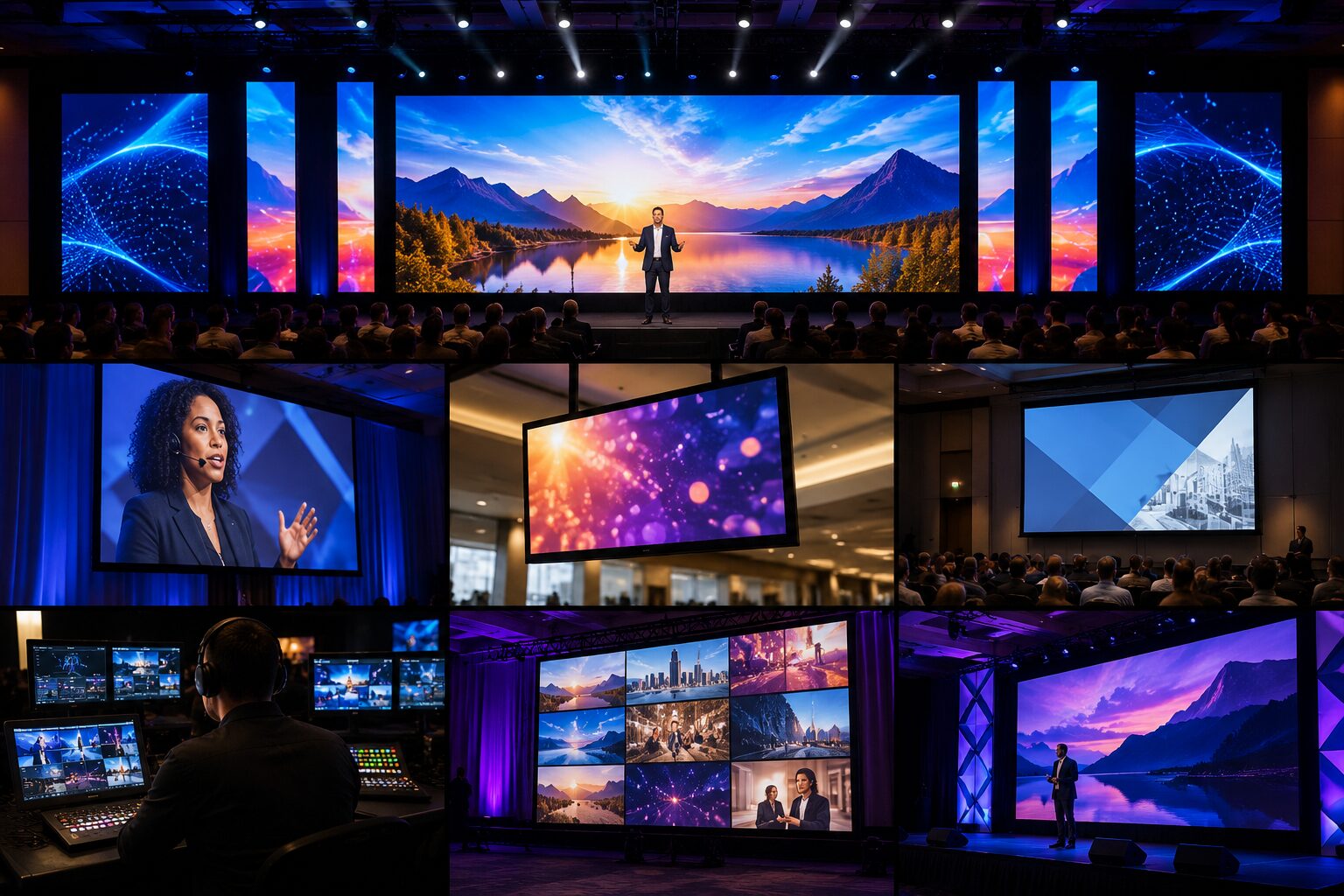
Extreme saturated lighting can look fantastic to the human eye but behave differently on camera. Your LED wall also contributes substantial light of its own. That’s why stage lighting, LED-wall brightness, color temperature, camera settings, and ambient lighting should be treated as parts of the same visual system.
Phoenix Technology Audio Visual specifically recommends balancing lighting intensity for both in-person viewing and video recording when programming event lighting.
Your Lighting Should Change With Your Run of Show
One of the biggest missed opportunities at live events is leaving the room in the same lighting look all night. Consider a fundraising gala.
Guest Arrival – Warm amber and soft purple. Elegant. Welcoming. Social.
Opening Video – House lights fade. Stage colors deepen. Attention moves forward.
Dinner – Warm ambient lighting returns. Guests can comfortably interact.
Mission Video – Room lighting lowers. Focus moves entirely toward the screens.
Fundraising Appeal – Subtle brand colors return while the speaker addresses the audience.
Awards – Brighter stage lighting with dramatic accents.
Celebration – Now you can introduce movement, richer colors, music synchronization, and higher energy.
The lighting design has effectively followed the emotional arc of the event.
Phoenix Technology Audio Visual’s existing guidance similarly recommends considering the run of show and using different palettes for different phases of an event rather than treating color as a single static decision.
Match the Lighting to Your Brand—Without Overdoing It
Brand colors are a great starting point. But they’re not always the entire answer.
Suppose your company’s primary color is bright orange. That doesn’t necessarily mean every wall, table, speaker, and centerpiece should be orange. Instead, use orange strategically.
Maybe your stage background includes subtle orange accents while the rest of the room uses complementary warm white. Or perhaps orange appears during walk-in and transition moments while the keynote portion shifts to more neutral lighting.
Brand recognition doesn’t require turning the ballroom into the inside of your logo. Good lighting design incorporates branding while still considering skin tones, cameras, décor, content, and the overall guest experience.
Lighting Should Support the Experience, Not Distract From It
One of the most important principles in event production is knowing when not to do something. Just because your lighting system can flash, chase, rotate, strobe, and cycle through millions of colors doesn’t mean it should.
A CEO discussing quarterly results probably doesn’t need moving lights spinning around the ballroom. An emotional nonprofit testimonial probably doesn’t need rapid color changes behind it.
But when the awards show begins? Or the product is revealed? Or the entertainment starts? That’s when you can change gears.
Professional lighting isn’t about constantly showing the audience what the equipment can do. It’s about using the equipment at exactly the right moment.
Create Moments, Not Just Pretty Rooms
The psychology of event lighting ultimately comes down to one idea: How do you want people to feel at this moment?
Do you want them focused? Excited? Comfortable? Inspired? Emotionally connected? Ready to celebrate?
Lighting can support every one of those experiences. And when lighting works together with audio, music, video content, scenic design, and an LED wall, the result becomes much more powerful than any single production element by itself.
A blank hotel ballroom becomes an environment. A stage becomes a focal point. A presentation becomes an experience. And an event becomes something guests remember.
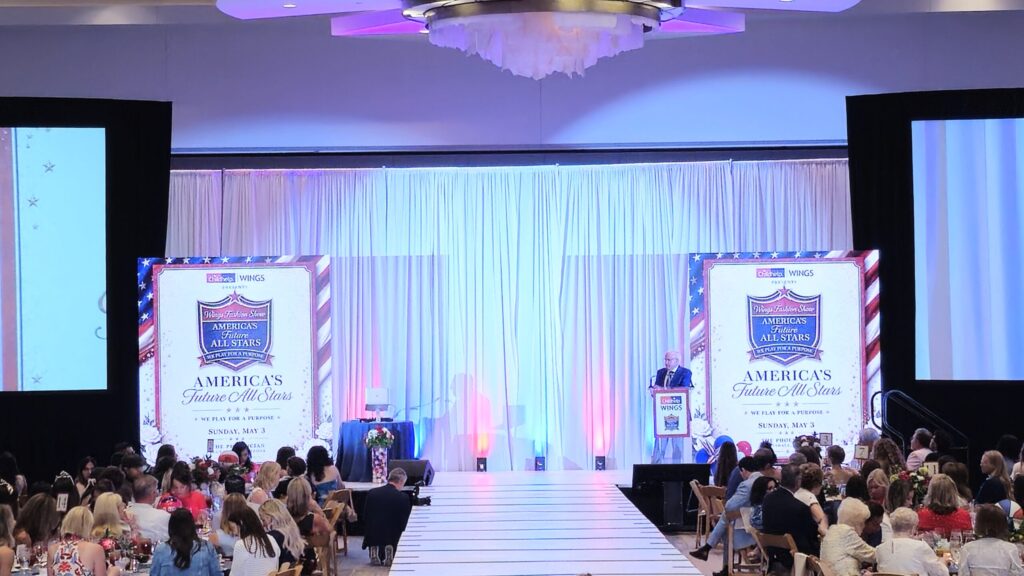
Let Phoenix Technology Audio Visual Light Up Your Next Event
At Phoenix Technology Audio Visual, we don’t believe lighting should simply be an item on an equipment list. It should be part of your event’s story.
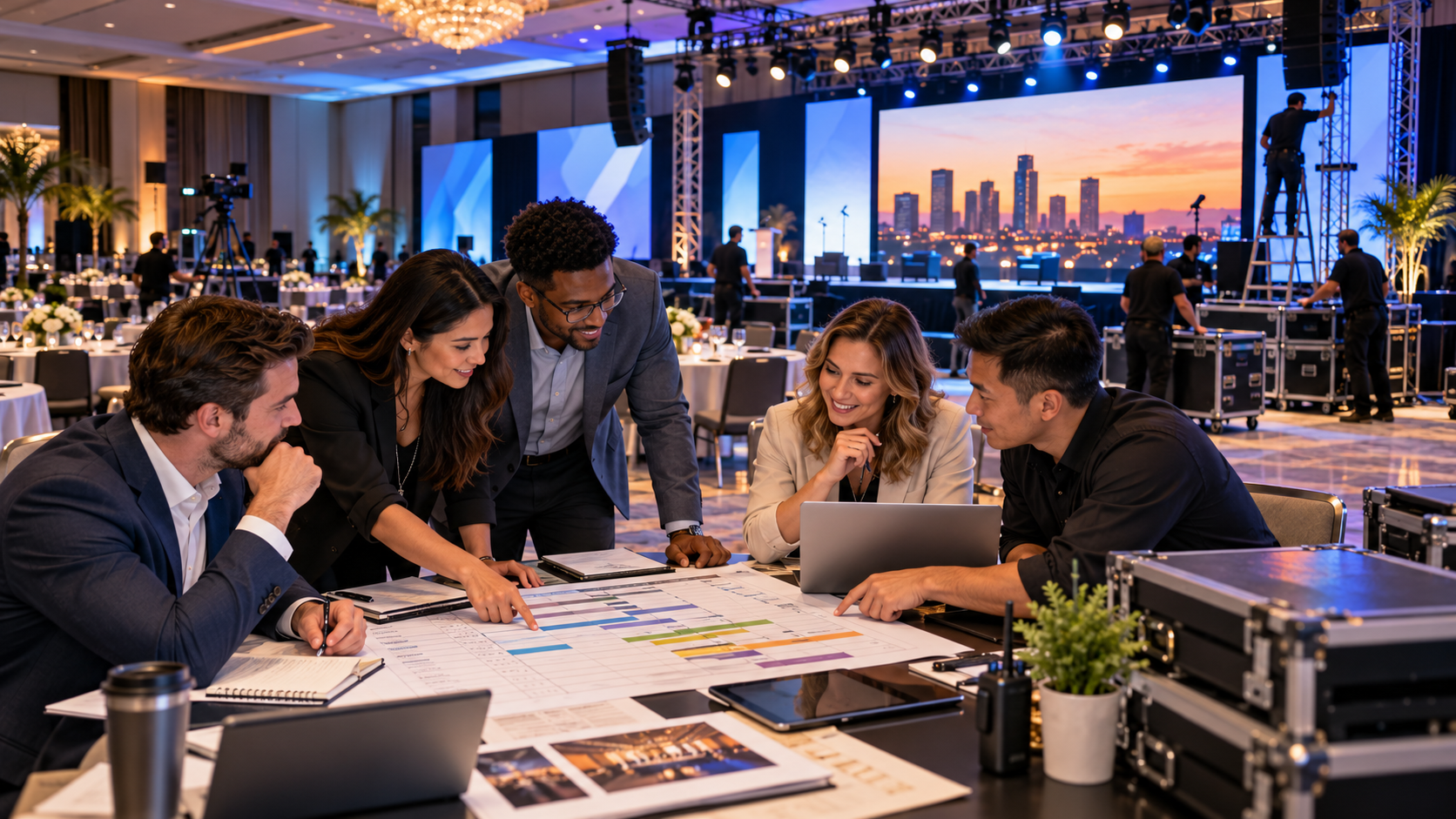
Our team provides creative lighting design as part of a broader range of live-event services including professional audio, video, LED walls, livestreaming, content support, and complete event production. Phoenix Technology’s current production process also includes early discussions about the audience and venue, technical concept development, production strategy, site visits, final adjustments, and on-site event-day support.
Whether you’re planning an elegant nonprofit fundraiser, a high-energy corporate sales summit, an awards gala, executive conference, holiday celebration, expo, or community event, we’ll work with you to develop a lighting environment that complements your brand, venue, audience, and goals.
From uplighting and stage washes to Lekos, PAR fixtures, video lighting, scenic illumination, programmed cues, and dynamic color transitions, our goal isn’t simply to make your event brighter. It’s to make every moment feel intentional.
With more than 30 years of event-technology experience represented across our team, Phoenix Technology Audio Visual combines technical expertise with communication, planning, and modern event-production solutions.
So before your next event, don’t just ask: “What color should the lights be?” Ask: “How do we want our guests to feel?” Then let the production design do the rest.
Start planning your next event with Phoenix Technology Audio Visual . Click HERE to see some of the sets we have created with different lighting options. Give us a follow on FACEBOOK and LINKEDIN to see more amazing content like this!